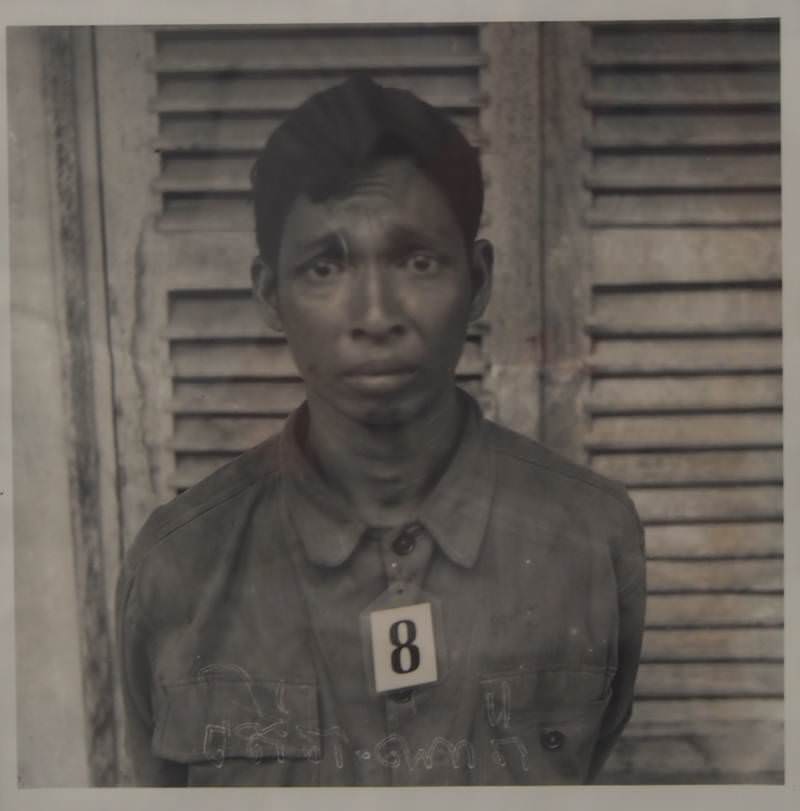
A rigid stare meets the camera, framed by worn wooden shutters and a plain, buttoned shirt that offers no protection from what comes next. A small tag marked “8” hangs at the chest, reducing a living person to an entry in a prison system built on fear and paperwork. The expression is the detail that lingers—wide-eyed, guarded, and exhausted, as if the lens itself has become another interrogator.
Tuol Sleng, known as S-21, stands as one of the most infamous symbols of Cambodia’s civil war era and the machinery of terror that followed. The title’s grim arithmetic—nearly 20,000 imprisoned and only seven survivors—turns this portrait into more than a single story; it becomes a doorway into mass detention, forced confessions, and systematic dehumanization. Even without names or dates on the print, the composition speaks the language of control: identification, documentation, and isolation.
For readers searching for the history of Tuol Sleng prison, Khmer Rouge imprisonment, or S-21 prisoner photographs, this image offers an unfiltered encounter with the human cost behind those terms. It asks us to see how ordinary features—hair, collar, posture—were cataloged in service of extraordinary violence. In a WordPress post, the photograph can serve as both record and warning, preserving a face that a brutal system tried to erase and reminding us why remembrance remains essential.