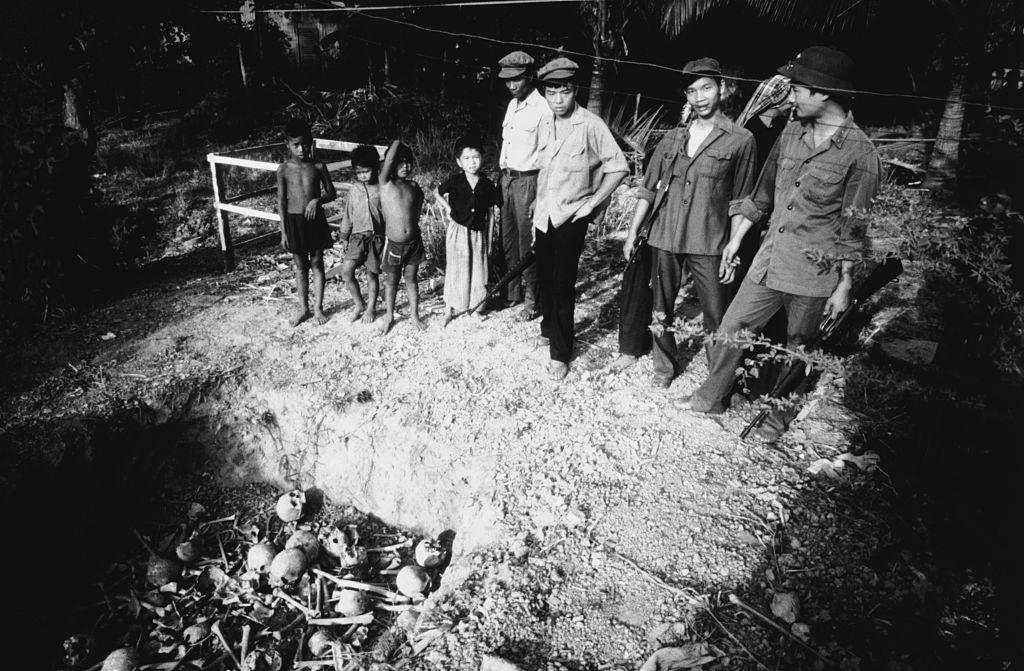
A jagged pit of pale earth dominates the foreground, its edge spilling down into a tangle of exposed bones and skulls. Along the rim, Vietnamese soldiers stand with rifles slung and sleeves rolled, their posture caught between duty and disbelief. Nearby, a small group of barefoot children lingers close, watching in silence as the ground gives up what it has hidden.
The title places the scene in 1980, a moment when the aftershocks of civil wars still shaped daily life across communities. Unearthing a mass grave is not only an act of discovery but also a grim accounting—evidence brought into daylight, grief made public, and rumors turned into physical fact. In the stark contrast of the photograph, the mundane details of clothing and stance sharpen the horror below, reminding viewers that such finds often occurred in ordinary places.
For readers seeking Vietnam history through archival photography, the power here lies in the witnesses: armed men tasked with order and children forced into premature understanding. The composition draws the eye from faces to the pit, then back again, creating a loop of looking that mirrors the moral weight of remembrance. As a historical photo, it underscores how conflict lingers long after gunfire fades—etched into soil, recovered by hands, and carried forward by those who saw it firsthand.