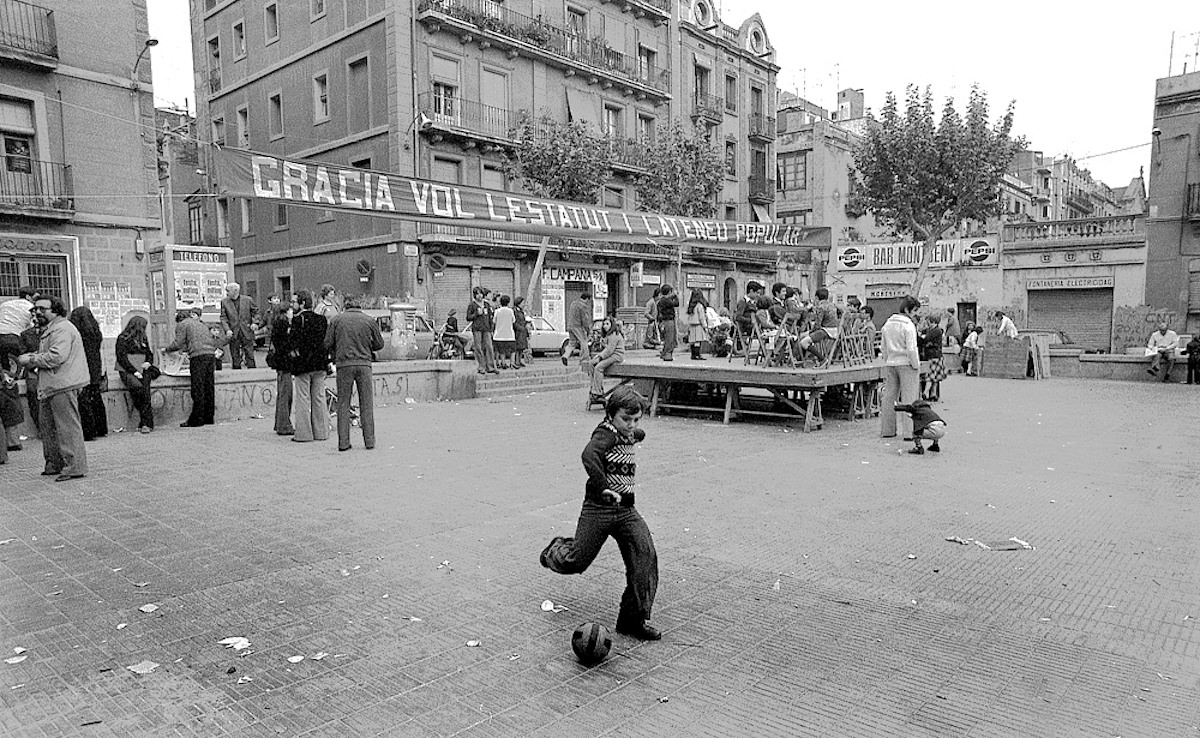
In the Barri de Gràcia in 1977, a wide neighborhood square becomes a stage for everyday life, where adults cluster in small conversations while children claim the open space for play. Apartment façades with balconies frame the scene, and the worn pavement—scattered with bits of paper—adds the gritty texture of a lived-in Barcelona street.
A banner stretched across the plaza reads “GRACIA VOL L’ESTATUT I L’AMNISTIA,” placing this street moment firmly in its era of public demands and civic energy. Near the center, makeshift platforms and rows of chairs suggest a community event or gathering in progress, blending local culture with the politics of the time.
One boy dribbles a football across the foreground, mid-stride, absorbed in the simple rhythm of sport while the neighborhood hums behind him. It’s an evocative slice of 1970s Barcelona: childhood games unfolding alongside community organizing, all within the distinct atmosphere of Gràcia’s public squares.