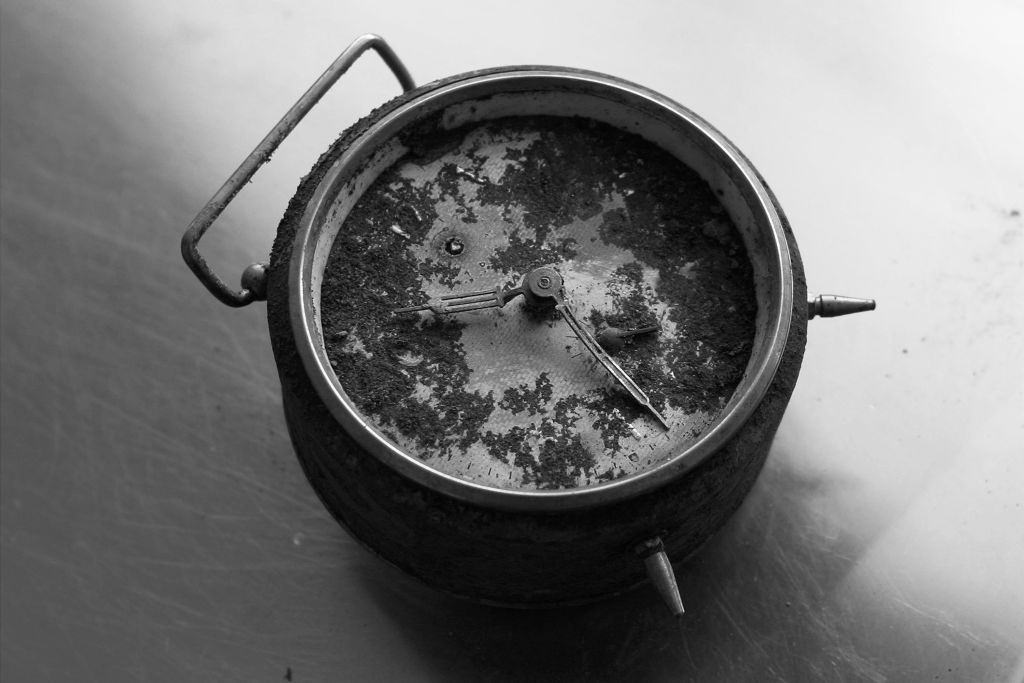
A battered clock sits on a steel surface, its face dulled by corrosion and grit, its hands frozen at an unreadable hour. The close, clinical framing makes the object feel less like a keepsake and more like evidence—small, ordinary, and suddenly heavy with meaning. Scratches, missing markings, and the rough texture along the rim hint at time spent underground before being recovered.
In the context of the Srebrenica mass grave investigations, such personal items can become heartbreaking stand-ins for the people who carried them. Stored in the morgue run by the ICMP, the clock is part of the careful work of forensic recovery, documentation, and identification that follows civil wars and atrocities. Each artifact is handled not for display, but to support truth-seeking and to help families connect fragments of a life to a name.
What lingers in this historical photo is the contrast between the clock’s original purpose—measuring minutes in everyday routines—and its later role inside an identification process shaped by loss. The stillness of the metal tabletop and the tight focus invite viewers to consider how material objects endure when human lives are interrupted. For readers searching for images tied to Srebrenica, mass graves, the ICMP, and the long aftermath of civil conflict, this single clock speaks quietly but powerfully about memory, evidence, and the unfinished work of accounting for the missing.