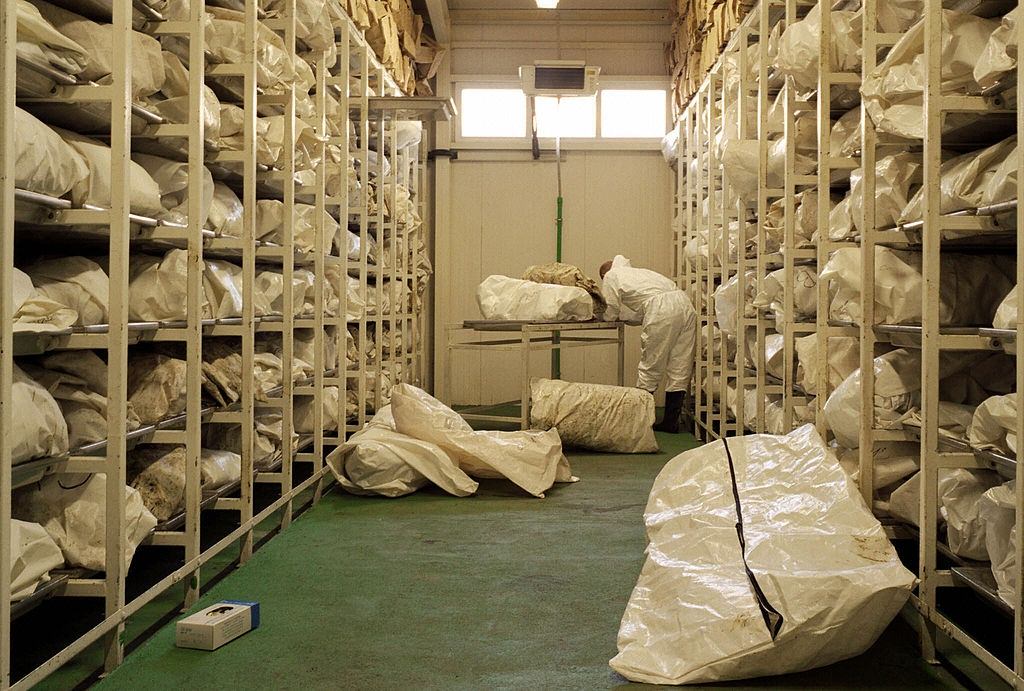
Rows of metal shelving recede into a cold, fluorescent corridor, each level stacked with sealed white bags that turn the room into an archive of absence. At the far end, a pathologist in protective clothing leans over a table, the careful posture suggesting procedure, patience, and the weight of what must be documented. The setting is a giant refrigerator in Tuzla, where thousands of bags are held in suspension between discovery and identification, a stark interior that makes the scale of loss impossible to ignore.
In the aftermath of the Bosnian civil wars, the massacre in Srebrenica in 1995 left families searching for names, graves, and any certainty they could reclaim. Forensic work became a crucial bridge between atrocity and accountability, translating fragments of evidence into records that courts and communities could recognize. The title’s reference to “4,000 bags” underscores not only a logistical reality, but also the relentless repetition of grief—one bag opened, one set of remains examined, one story pieced together at a time.
Silence seems built into the photograph: the clean floor, the harsh light, and the tightly wrapped forms that speak without words. As a historical image, it documents the mechanics of post-conflict recovery—how modern forensic pathology and evidence handling intersect with mourning, memory, and justice. Readers looking for context on Tuzla, Srebrenica, and the lasting legacy of the Bosnian War will find in this scene a sobering reminder that history is often preserved not in monuments, but in meticulous work carried out behind refrigerated doors.