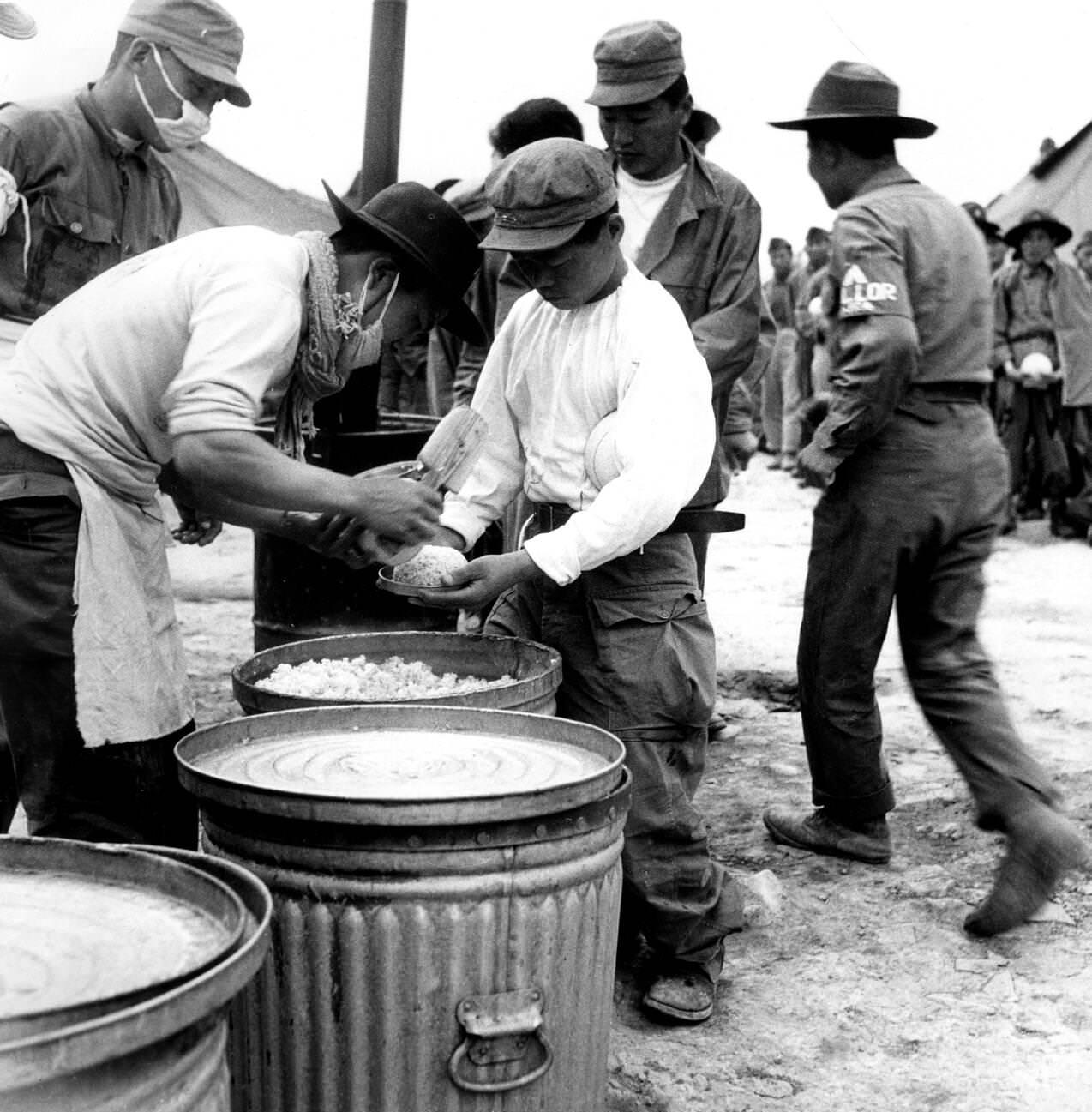
Dusty ground, canvas tents, and a line of waiting bodies set the scene as relief workers ladle rice from large metal bins into a man’s bowl. The title places the moment in 1951, during the Korean War, when U.N. camps became lifelines for civilians uprooted by fast-moving fronts and shattered supply chains. In the foreground, the simple exchange of food feels both routine and immense—an ordinary scoop measured against extraordinary need.
Close details hint at the pressures of camp life: practical clothing, tightly held containers, and watchful faces turned toward the serving point. A masked worker leans in to portion the grain, while others stand nearby to keep order and keep the process moving. Behind them, the queue stretches back into the haze, suggesting how many mouths depended on each delivery and how quickly a day’s ration could become the day’s defining event.
Viewed today, the photograph works as a stark record of humanitarian logistics during a twentieth-century conflict, where survival often hinged on organized distribution as much as on battlefield outcomes. It also echoes the “Civil Wars” theme by underscoring what internal disruption and contested control do to civilian life: displacement, scarcity, and reliance on international aid. For readers searching Korean War history, U.N. relief efforts, refugee camp conditions, or food distribution in wartime, this image offers a grounded, human-scale entry point into the era.