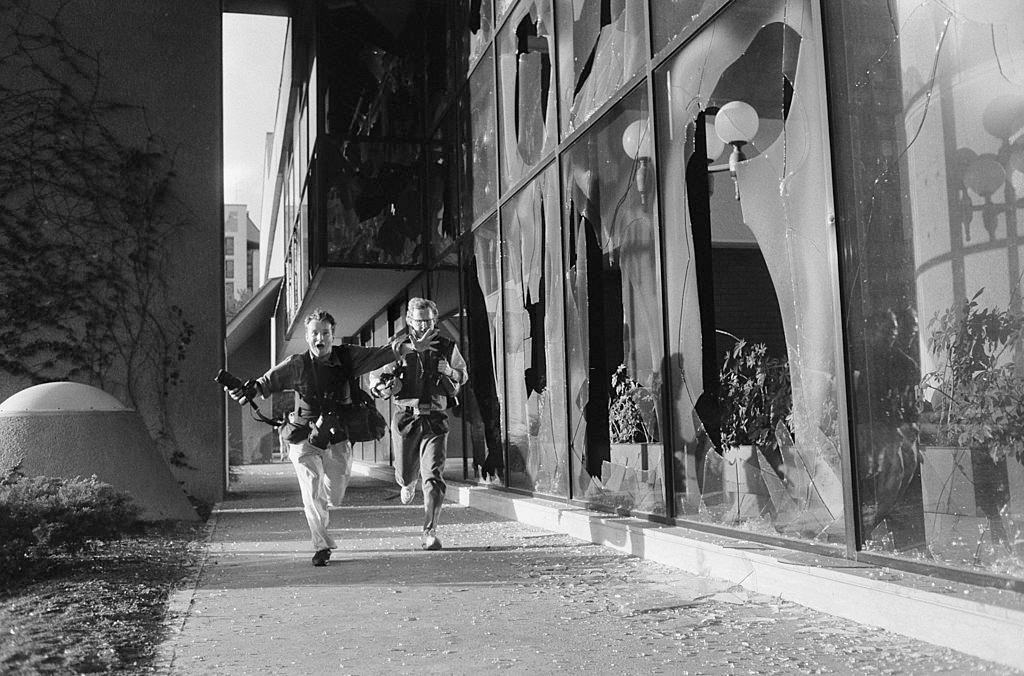
Along the battered frontage of the Holiday Inn, two photographers sprint for cover with cameras still in hand, moving fast beside a wall of shattered glass. The broken windowpanes and scattered debris on the pavement turn an ordinary hotel exterior into a stark reminder of how quickly a civilian space can be transformed by violence. In July 1992, this building served as a hub for the media during the war, and the urgency in their stride conveys how precarious that role could be.
Paul Lowe and David Turnley are caught in a moment that compresses the entire logic of conflict reporting into a single frame: witness, risk, and the instinct to survive. Reflections in the damaged windows hint at the world inside—lights, fixtures, and fragments of normality—while the street outside tells a different story, one shaped by blasts and sudden danger. The contrast between the hotel’s familiar architecture and the jagged edges of destruction makes the scene feel both immediate and unsettling.
For readers drawn to civil wars history, war photography, and the lived reality of journalists on the front line, this image offers more than action; it shows the infrastructure of reporting under fire. The Holiday Inn’s reputation as a media home base underscores how conflict zones develop their own geography—places of brief refuge that can become targets or traps in an instant. Seen today, the photograph stands as a vivid document of 1992 wartime conditions and the split-second decisions behind the images that reach the wider world.