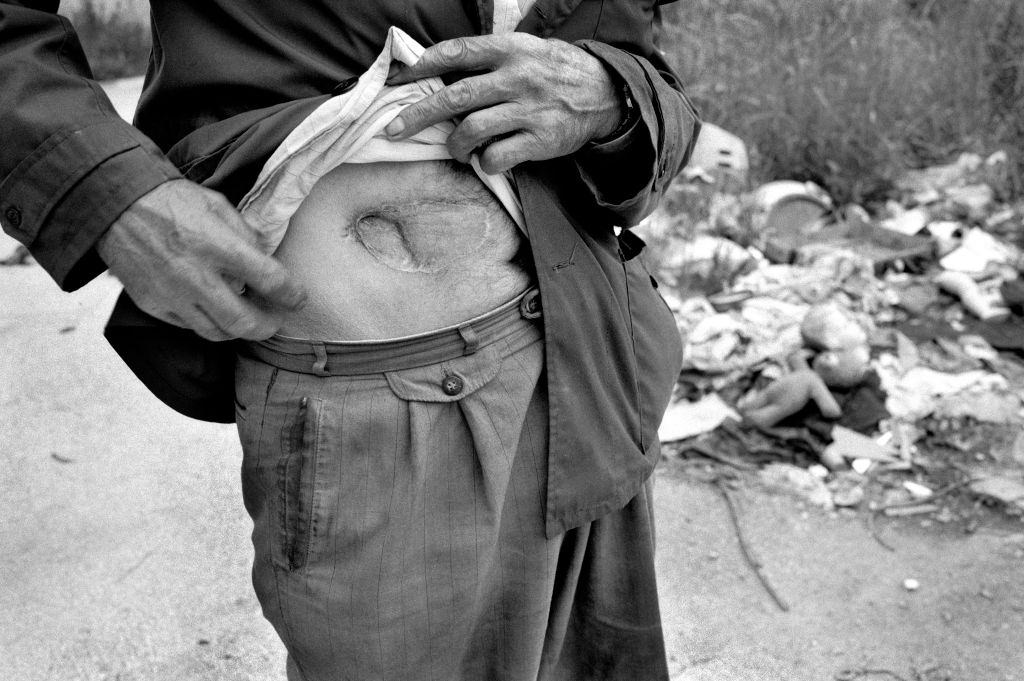
An elderly man lifts his shirt to reveal a pronounced, puckered scar across his stomach—an intimate, wordless testimony to a shrapnel wound from a mortar shell. The frame focuses on his hands and torso rather than his face, turning the body itself into a historical document. Creased clothing, weathered skin, and the careful gesture of pulling fabric aside communicate both vulnerability and resolve in a way text alone rarely can.
Behind him, scattered debris and a rough roadside setting hint at the broader violence that made such injuries commonplace during civil wars. The contrast is striking: a single healed wound in the foreground set against a landscape that suggests ongoing disruption, displacement, and hardship. As a piece of 1966 war photography, the image underscores how conflict follows people long after the blast, carried in scars that remain when headlines move on.
For readers searching for civil war history, wartime medical trauma, and the human cost of mortar shell shrapnel, this photograph offers a direct, unforgettable point of entry. It invites reflection on survival and the everyday aftermath of combat—how civilians and fighters alike live with reminders etched into their bodies. Rather than dramatize battle, the scene centers endurance, making the scar a quiet monument to a life interrupted and continued.