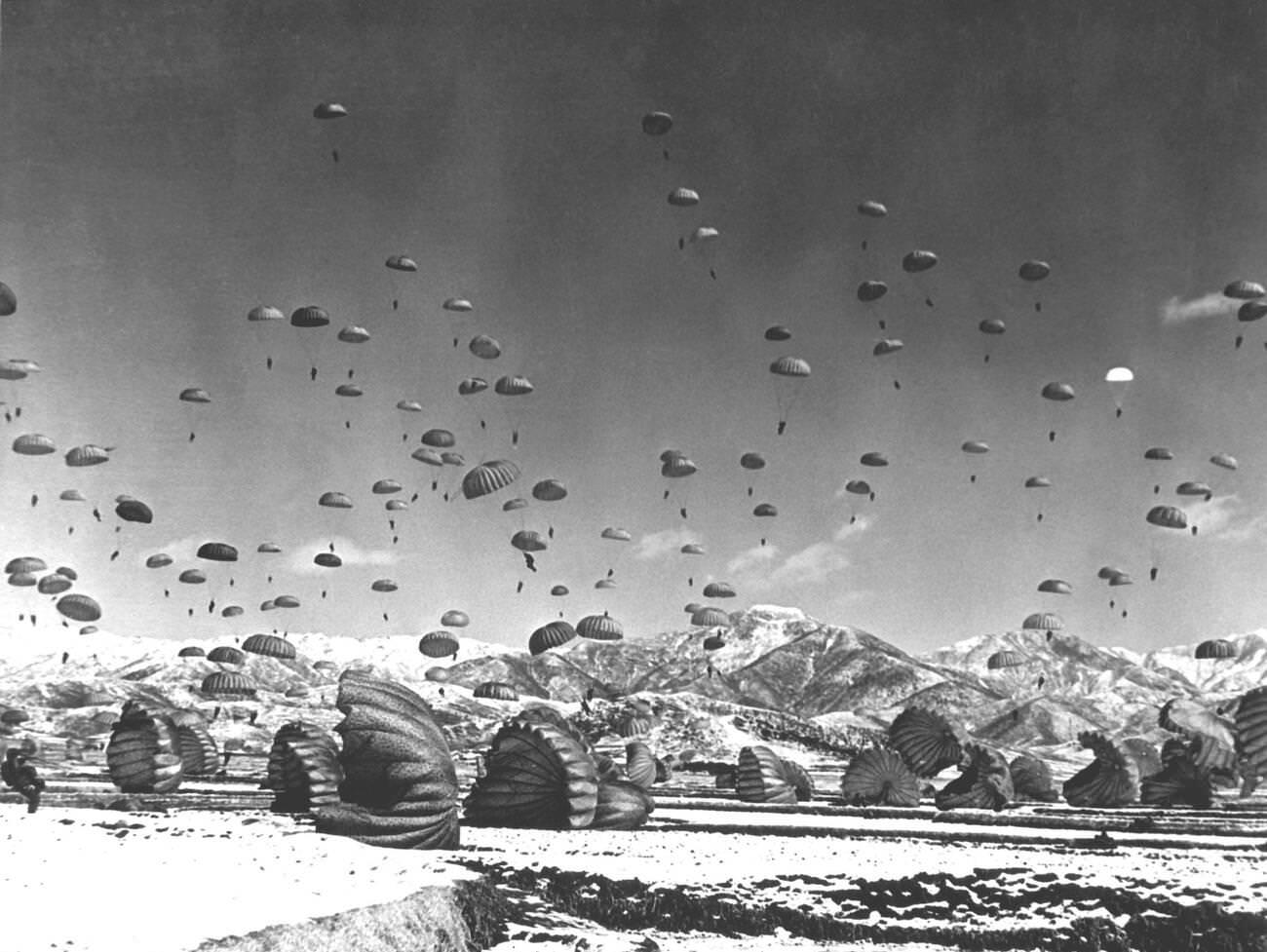
Parachutes pepper the sky in a wide, sweeping view of an airborne drop during a combat operation in 1951, when U.S. Army paratroopers and United Nations forces relied on speed, surprise, and disciplined coordination. Below them, a stark winter landscape stretches toward rugged mountains, turning the descent into a dramatic contrast of soft canopies against hard terrain. The scene feels both immense and intimate: dozens of soldiers suspended in the open air, each one a small silhouette moving toward the same dangerous objective.
In the foreground, collapsed chutes lie scattered across snow and earth, evidence of how quickly a mass jump transforms from spectacle to sprint. The photo’s perspective emphasizes scale—canopies still floating high overhead while others have already landed—suggesting the tight timing required to assemble, secure equipment, and push forward before an enemy can react. It’s a visual reminder that airborne operations were not only about bravery, but also about logistics, weather, and the unforgiving realities of terrain.
Across the broader story of the Korean War era, images like this help explain why airborne troops carried such symbolic weight for allied forces: they represented mobility in a conflict defined by shifting fronts and harsh seasons. For readers searching for U.S. Army airborne history, UN coalition warfare, or 1951 combat photography, this photograph offers a vivid anchor—an instant when strategy, technology, and human risk converged under a sky crowded with parachutes. The mountains and snow don’t just frame the action; they underscore the conditions that shaped every decision on the ground.