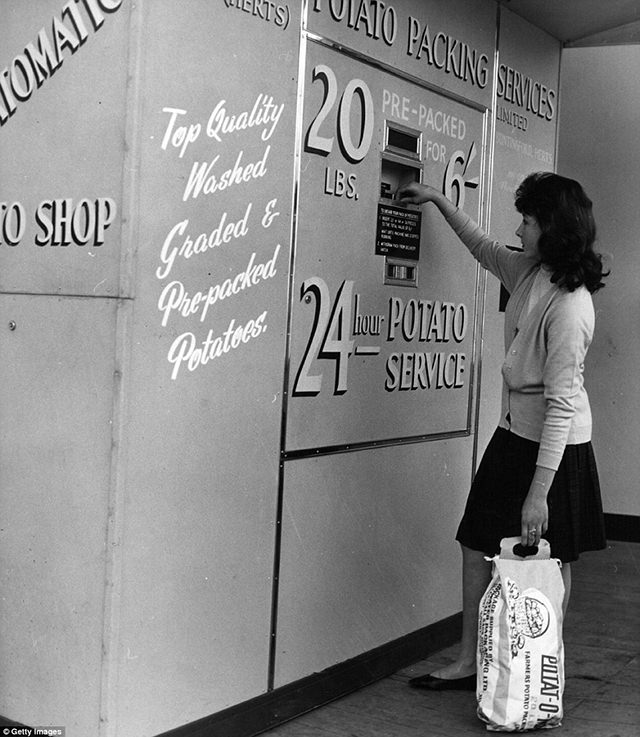
Modern convenience, it turns out, once came wrapped in paper sacks and the earthy promise of “top quality washed, graded & pre-packed potatoes.” In this 1962 scene from Chelsea, a woman reaches into what the title calls Britain’s first potato vending machine, an early experiment in bringing automation to the everyday shopping list. The wall-sized lettering feels half advertisement, half instruction manual—bold enough to stop passers-by and persuade them that the future could be as simple as turning up and buying spuds.
Painted on the machine are the selling points that mattered to busy Londoners: “pre-packed,” a clear weight in “lbs,” and the striking guarantee of a “24 hour potato service.” The setup resembles a storefront pared down to its essentials, replacing counter conversation with a slot and a mechanism, while still insisting on quality and freshness. Even without a visible crowd, the composition suggests curiosity—an ordinary customer trying a novel idea, bridging traditional market habits with a new, self-service rhythm.
Chelsea in the early 1960s was a place where modern retail ideas could find an audience, and this photo makes a small domestic revolution feel tangible. It’s not glamorous technology, but it’s revealing: food distribution, packaging, and consumer trust all condensed into one machine on a wall. For readers searching for British history, 1960s London life, or the story of vending machines before they sold everything, this image offers a memorable snapshot of how innovation crept into the most ordinary corner of the kitchen.