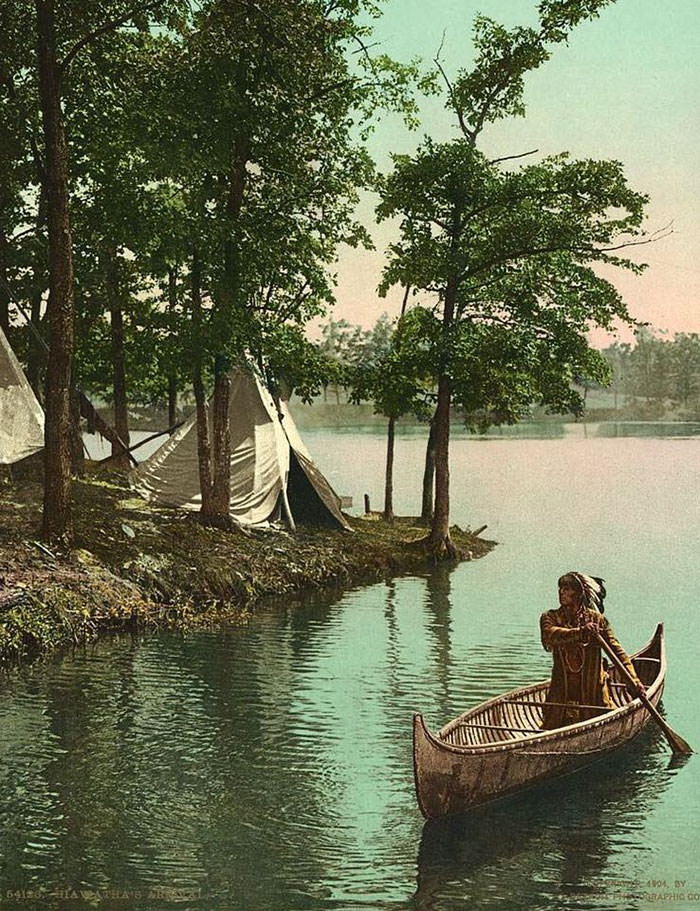
Even before you notice the lone canoe, the shoreline draws you in: a quiet inlet edged with tall trees and a soft, tinted sky, its calm water turning the forest into a wavering mirror. Canvas tents sit back from the bank, their pale surfaces catching the light and hinting at a temporary camp—something set up for a season, a performance, or a passing moment. The colorization gives the scene a gentle, storybook atmosphere while still preserving the early-20th-century look that the Detroit Photographic Co was known for.
In the foreground, a single figure stands in the canoe, paddle held ready, drifting toward the camp as if returning from a long errand across the lake. The title, “Hiawatha’s Return.” (1904), invites viewers to read the image as more than a landscape study; it points to the era’s popular fascination with romanticized Native American themes in art, tourism, and staged tableaux. Whether candid or carefully arranged, the composition balances wilderness, water, and human presence in a way that feels deliberately theatrical.
For anyone searching for a 1904 Detroit Photographic Co photo, early colorized prints, or historical images of canoe travel and lakeside camps, this post offers a vivid example of how the past was pictured—and packaged—for audiences. The stillness of the water and the careful placement of tents, trees, and boat create a narrative pause, the kind that makes a title feel like a chapter rather than a caption. “Hiawatha’s Return” remains a window into how photographic companies used color, scenery, and storytelling to shape memory at the turn of the century.