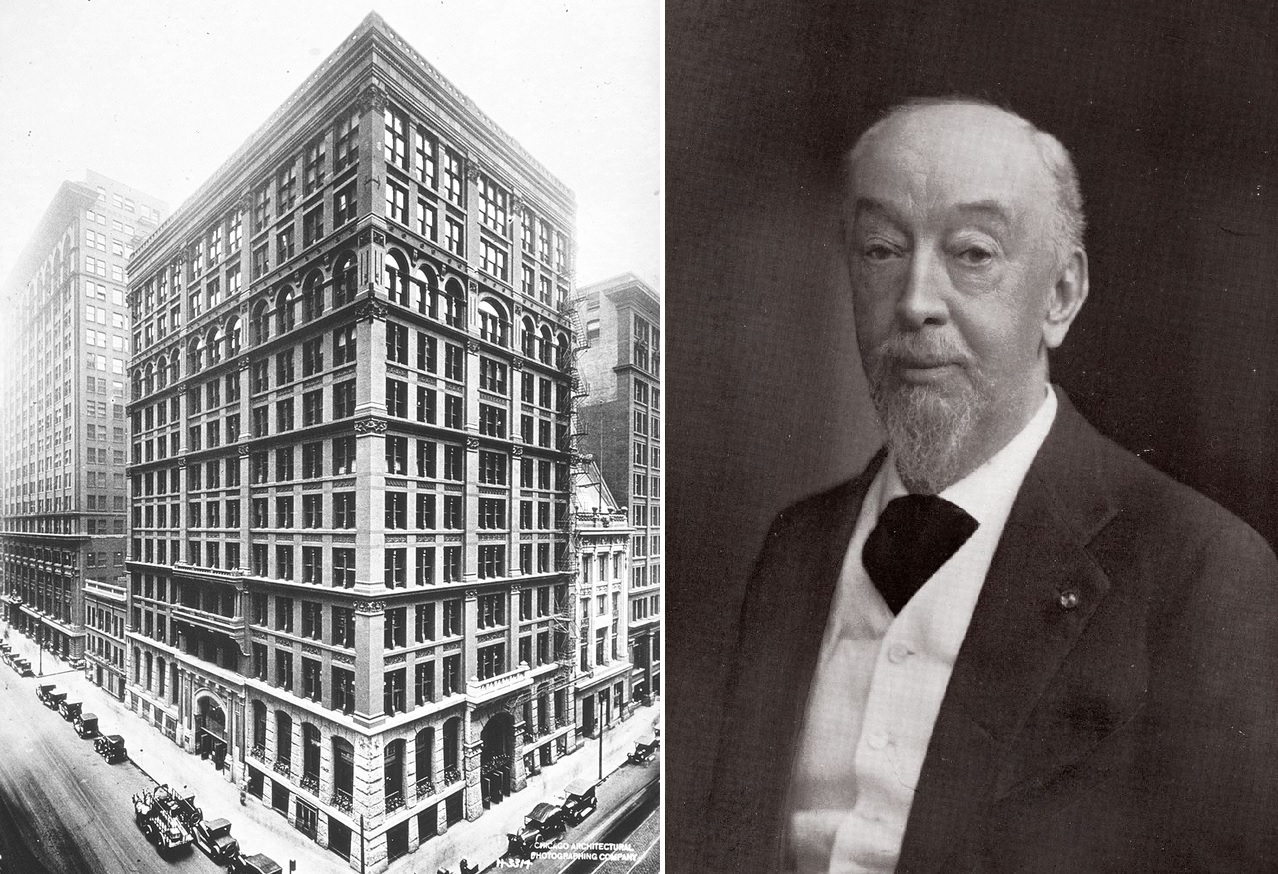
Rising above the street grid, the early skyscraper in William Le Baron’s 1884 view dominates its block with a confident, almost monumental calm. Rows of evenly spaced windows stack upward in a strict rhythm, while the heavy base and arched upper banding give the structure a clear hierarchy from sidewalk to cornice. At ground level, tiny horse-drawn vehicles and pedestrians (barely more than marks in the scene) underline the building’s true scale and the new kind of city life that tall construction was beginning to demand.
Architecture here reads like a bridge between eras: a masonry-faced exterior and classical detailing paired with the ambition of vertical commercial space. The crisp corners, strong horizontal lines, and dense fenestration speak to late-19th-century innovations in building practice, when structural ideas and urban economics pushed offices skyward. Seen in its surrounding streetscape, the tower becomes less a lone monument and more a practical machine for work, light, and rentable floors—an invention in itself.
Alongside the building appears a formal portrait, inviting viewers to connect design with the people and professional networks that made such projects possible. Together, the images suggest an age when engineering, materials, and city planning were rapidly evolving, and when “skyscraper” was still a daring concept rather than an everyday skyline feature. For readers interested in architectural history, early high-rise construction, and the origins of modern downtowns, this post offers a compelling window into how the vertical city began.