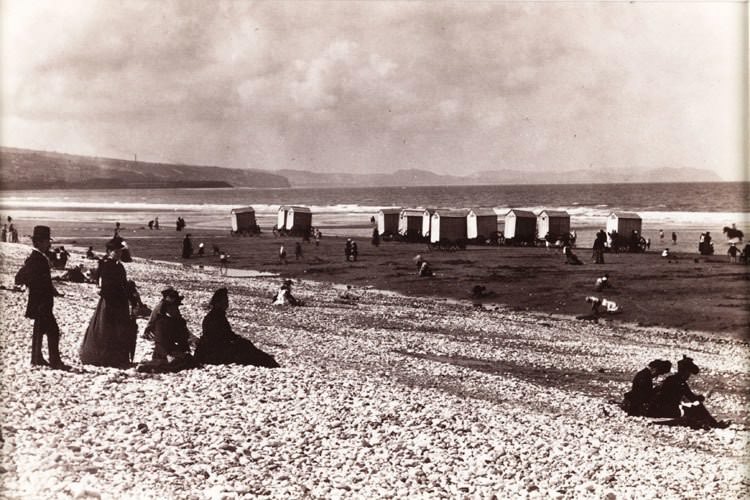
Along a wide, pebbled shore, a neat row of bathing machines sits at the water’s edge like tiny seaside huts on wheels. Figures in long coats and full skirts gather in small clusters, some standing to watch the surf while others settle on the stones, turning an ordinary beach into a carefully managed social space. The distant headland and calm horizon add to the sense of a planned outing—part leisure, part ritual.
Bathing machines were one of the Victorian era’s most curious inventions, designed to let people change into swimwear and enter the sea with a measure of privacy. Pulled into the shallows, these rolling cabins acted as mobile changing rooms and modesty screens, reflecting the period’s strict ideas about propriety and public appearance. Even without close-up detail, the orderly placement of the machines and the clothed onlookers hint at how controlled “going swimming” could be.
Going Swimming On Wheels brings together more than 50 historic photos that trace this strange, transitional chapter in beach culture, when seaside holidays were growing popular but social rules still dictated how bodies could be seen. From crowded sands to quieter stretches like the one pictured here, the bathing machine became a symbol of innovation serving etiquette. Browse the collection for a vivid look at Victorian seaside life, early tourism, and the inventions that shaped the way people approached the ocean.