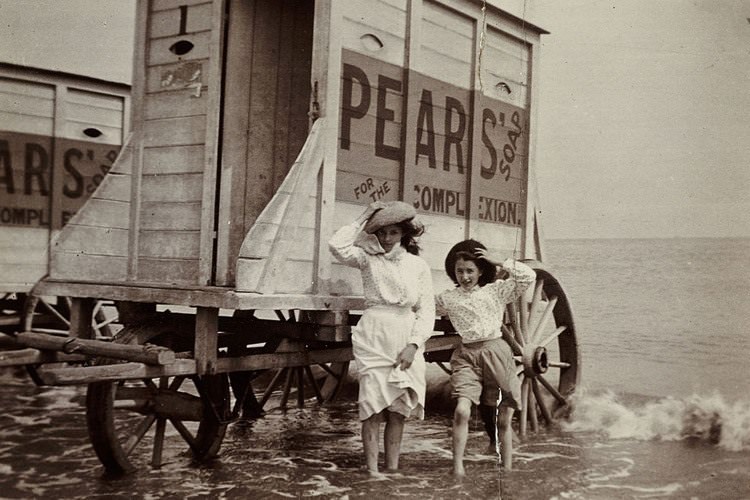
Pears Soap branding looms large on a wooden bathing machine as it stands at the very edge of the surf, its tall sides and small openings hinting at a private changing space tucked inside. Two bathers pose in front with the sea stretching behind them, dressed in modest, practical seaside clothing rather than anything that looks like modern swimwear. The wagon’s spoked wheels sit half in wet sand, making the contraption feel both homely and oddly mechanical against the open water.
Victorian-era beachgoing was shaped by rules of propriety as much as by the pleasures of salt air, and bathing machines were the ingenious compromise—mobile huts that could be rolled close to deeper water so swimmers could enter discreetly. Advertising on the panels suggests how commercialized popular seaside resorts became, turning even a utilitarian changing cabin into a moving billboard. Details like the heavy timber frame, the high platform, and the sheer bulk of the structure underline the effort required just to take a “proper” dip.
Going swimming on wheels meant turning the shoreline into a stage where technology, etiquette, and leisure met in the spray. In this gallery of historic bathing machine photos, scenes like this one help explain why these wheeled inventions became icons of Victorian seaside culture before gradually disappearing with changing fashions and freer attitudes. For anyone searching for antique beach photographs, bathing machine history, or the evolution of swim culture, the mix of surf, signage, and sturdy craftsmanship tells the story at a glance.