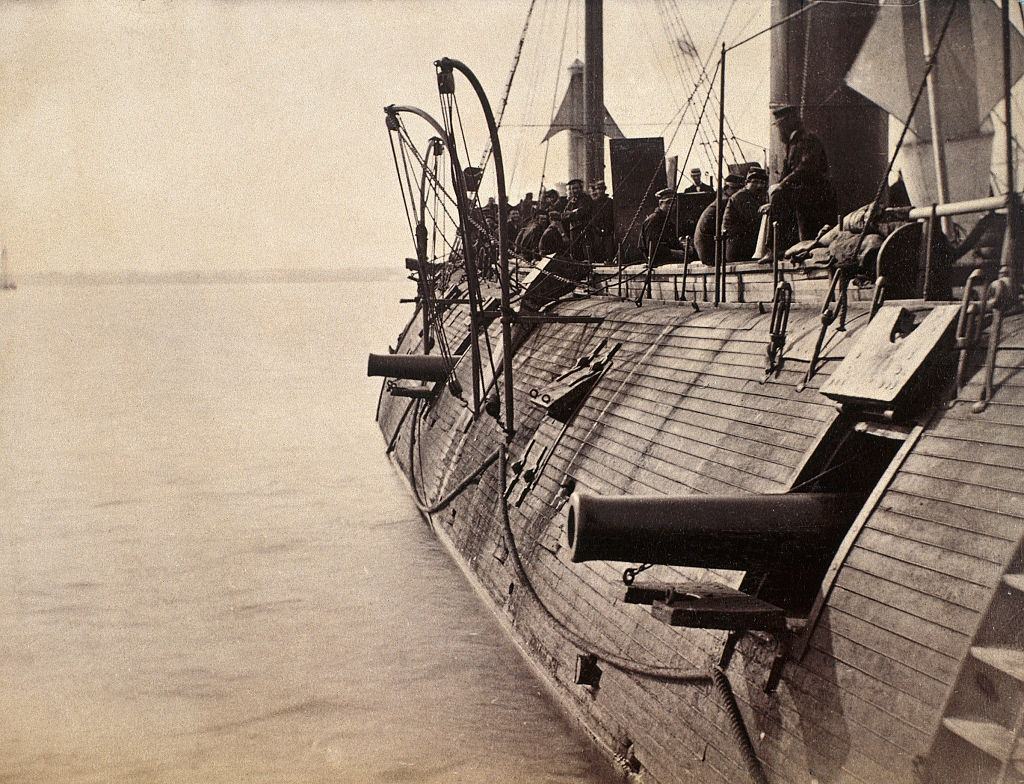
Along the curved flank of the Union ironclad USS Galena, the armor plating bears the unmistakable scars of combat—cannonballs visibly lodged in the ship’s side like grim punctuation marks. Sailcloth, rigging, and the low line of the gunports frame a vessel that was built to take punishment, yet this view makes clear just how close and violent river warfare could be. Men cluster along the deck, dwarfed by the slanted casemate and heavy guns, as the calm surface of the James River contrasts with the damage recorded in iron.
In 1862, Galena pushed into contested waters where Confederate batteries could concentrate their fire from the banks, turning a narrow river corridor into a deadly shooting gallery. The embedded shot speaks to the limits of early ironclad design: armor that could deflect some blows, yet still be penetrated or battered enough to trap projectiles in place. For Civil War historians, details like the riveted plating, the gun embrasures, and the battered hull offer a tangible look at how rapidly naval technology was evolving under battlefield pressure.
For readers searching Civil War naval history, ironclads, or the James River campaign, this photograph is a stark primary-source glimpse into the era’s hard realities. It is not a staged triumphal portrait so much as an after-action inventory of survival, showing what it meant for a ship to endure sustained artillery fire at close range. The USS Galena’s wounded side invites a slower look at the material evidence of battle—iron, wood, and ordnance fused into a single enduring scene.