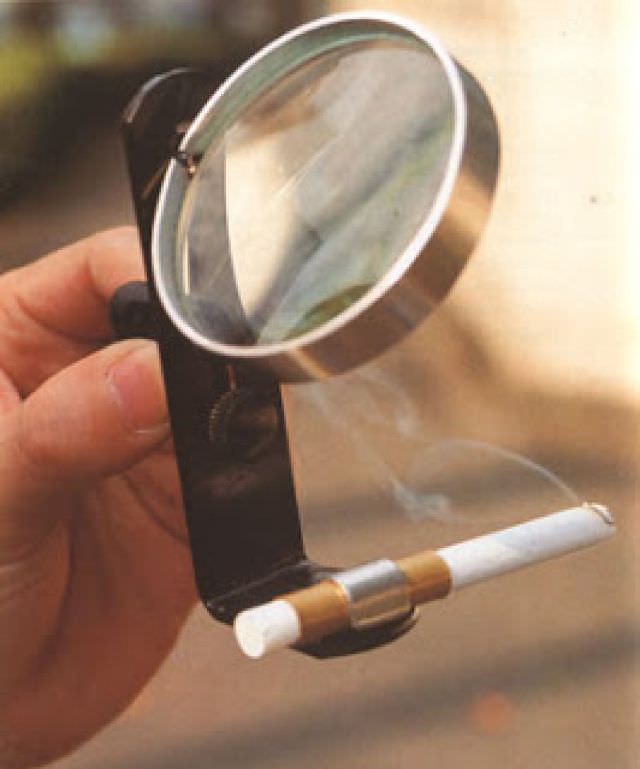
A hand steadies a curious little contraption: a circular magnifying lens mounted on a simple frame, with a cigarette held in a small clamp below. The setup is unmistakably meant to harness sunlight, focusing a bright point of heat the way children once used a magnifying glass to scorch paper—only here it’s packaged as a portable gadget. With its mix of metal and dark support strut, the device reads like a practical experiment turned consumer novelty.
The idea behind a solar-powered cigarette lighter sits at the crossroads of “Inventions” culture and everyday habit, promising flame without fuel, matches, or a spark wheel. What makes the photo compelling is how clearly it communicates function through form: align the lens, aim into the sun, and let concentrated light do the rest. It’s a small reminder of an era when solar power was often introduced through clever accessories long before rooftop panels became commonplace.
For readers interested in vintage inventions and alternative energy history, this image offers an early, almost playful take on renewable tech—miniaturized, personal, and dependent on clear weather. The bright glare around the lens and the wisp of smoke near the cigarette underline the simple physics at work, turning sunlight into ignition. As a historical photo subject, the solar-powered cigarette lighter invites a broader conversation about how innovation is marketed: sometimes as serious progress, sometimes as a pocket-sized marvel meant to surprise.