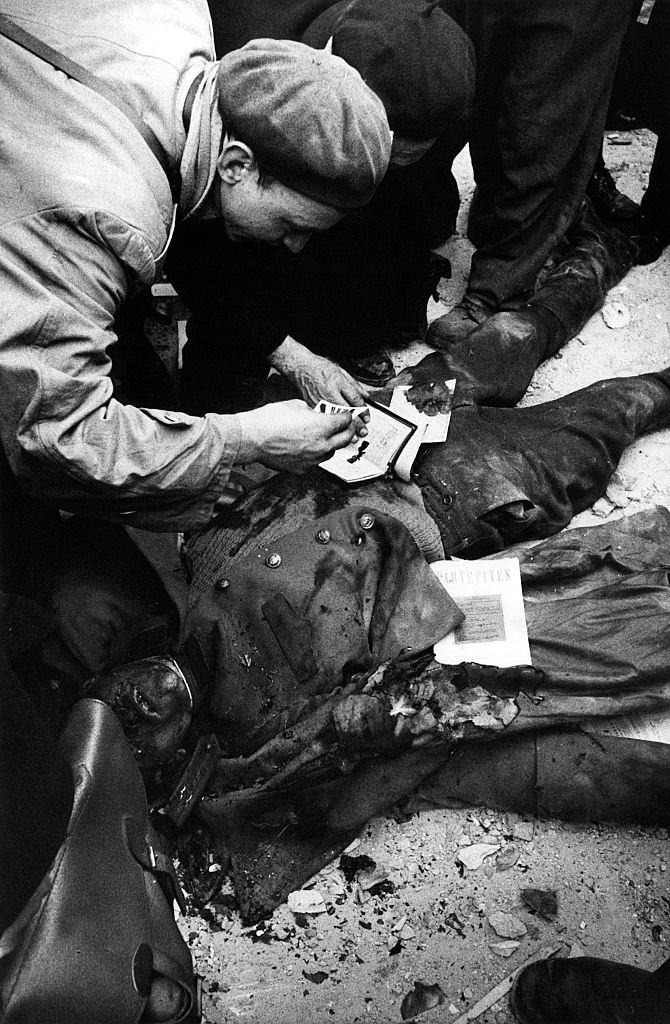
Bent low over the pavement, an armed insurgent thumbs through papers taken from a fallen member of Hungary’s secret police, the ÁVH, in Budapest during November 1956. The frame is tight and urgent: hands, boots, a cap pulled down in concentration, and the blunt presence of weapons and torn masonry. Documents—so ordinary in calmer times—become battlefield artifacts, evidence to be weighed in the open air as the city’s streets turn into improvised courts of opinion.
What makes the scene so unsettling is its mix of the bureaucratic and the brutal, a collision at the heart of the Hungarian Revolution. The ÁVH represented the surveillance state and its apparatus of files, interrogations, and informants; the rebels who seized these papers were not only looking for identification, but for proof of networks and complicity. In moments like this, the struggle is fought as much over information as it is over barricades, with printed pages carrying the power to condemn, exonerate, or inflame.
For readers exploring civil wars and uprisings, this historical photo offers a raw glimpse into how revolutions expose the paper trail of power. It hints at the chaotic aftermath of street fighting—shattered debris underfoot, hurried scrutiny, and the tense proximity of death—while pointing to the larger story of Budapest in 1956. As a piece of Hungarian history and Cold War-era memory, it reminds us that regimes are built on records, and that the opening of those records can be as consequential as any gunshot.