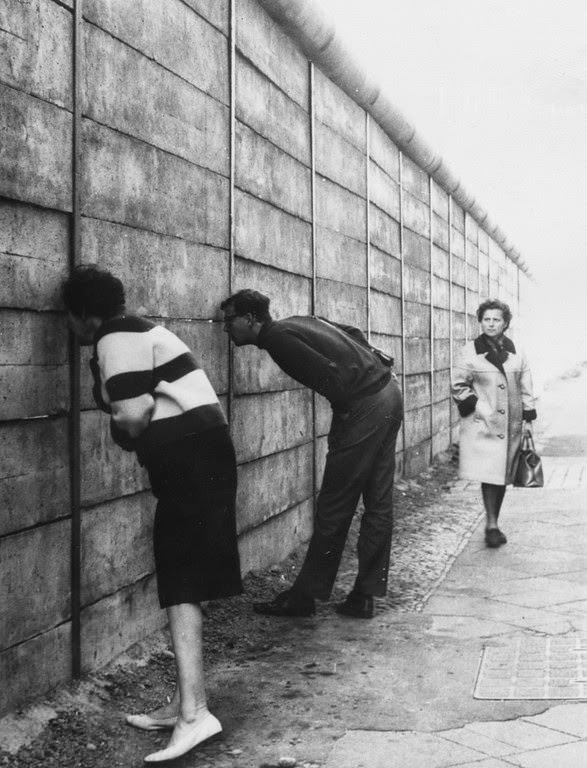
Along a stark stretch of the Berlin Wall near Checkpoint Charlie, two West Berliners press close to the concrete, bending and squinting into a small opening as if the narrow gap could somehow restore a wider view of the city they once knew. The wall dominates the frame with its heavy panels and hard seams, turning an everyday sidewalk into a border zone where curiosity and longing meet raw architecture.
Their body language tells the story of Cold War division better than any slogan: cautious, intent, and quietly defiant, they search for life on the other side of the barrier separating West Berlin from the Eastern sector. A third passerby moves past them with a handbag and a composed expression, underscoring how quickly extraordinary circumstances became routine in a city cut in two.
Near Check Point Charlie—one of the most watched and symbolic crossing points in Berlin—small acts like peering through a hole carried outsized meaning, linking neighbors, families, and streets that had been abruptly severed. For readers drawn to Berlin Wall history, this moment distills the human scale of geopolitical conflict: not tanks or speeches, but ordinary people confronting a concrete frontier and trying, however briefly, to see beyond it.