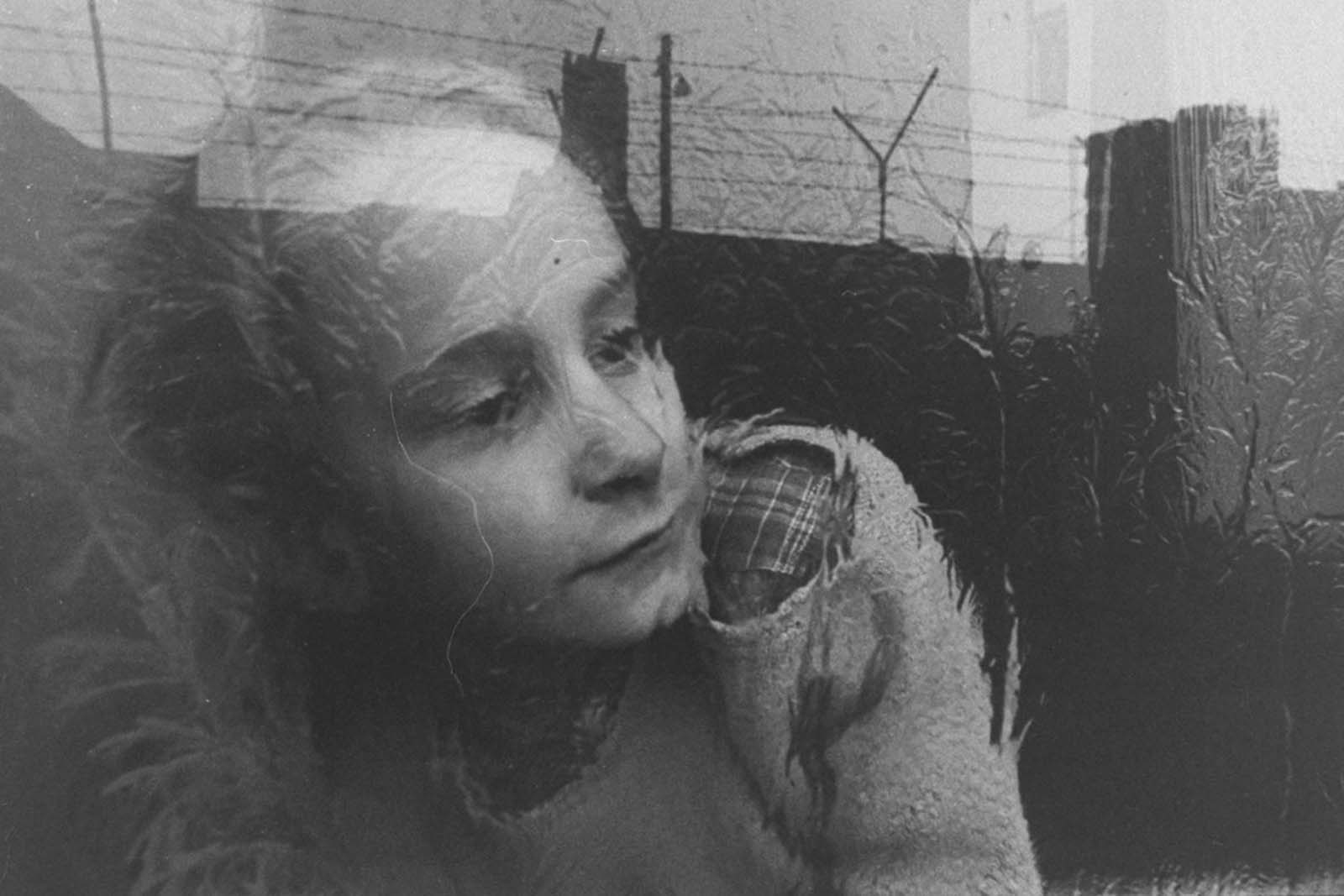
Soft light falls across a young girl’s face as she leans into the glass of an apartment window, her expression caught between curiosity and quiet resignation. The pane becomes a second scene: reflected behind her features is the harsh geometry of barbed wire crowning the nearby Berlin Wall, its posts and twisted strands cutting across the sky. In a single frame, domestic interior and militarized border collide, turning an ordinary moment into a portrait of a divided city.
Taken in December 1962, the photograph speaks to the early years of the Wall, when its presence was still newly woven into daily routines and childhood memories. The girl’s gaze doesn’t meet the camera; it drifts outward, as if searching for a horizon the wire refuses to grant. That reflection—part barrier, part shadow—suggests how separation in Cold War Berlin seeped into private life, even when viewed from the supposed safety of home.
For readers drawn to Berlin Wall history and Cold War photography, this image offers more than documentation; it offers mood, texture, and a human scale to geopolitical conflict. The stark contrast between soft hair and hard fencing, between a warm sweater and a cold perimeter, underscores how borders are built not only of concrete and wire but also of waiting, wondering, and looking out. In the silence of the window, the era’s tension feels immediate, intimate, and enduring.