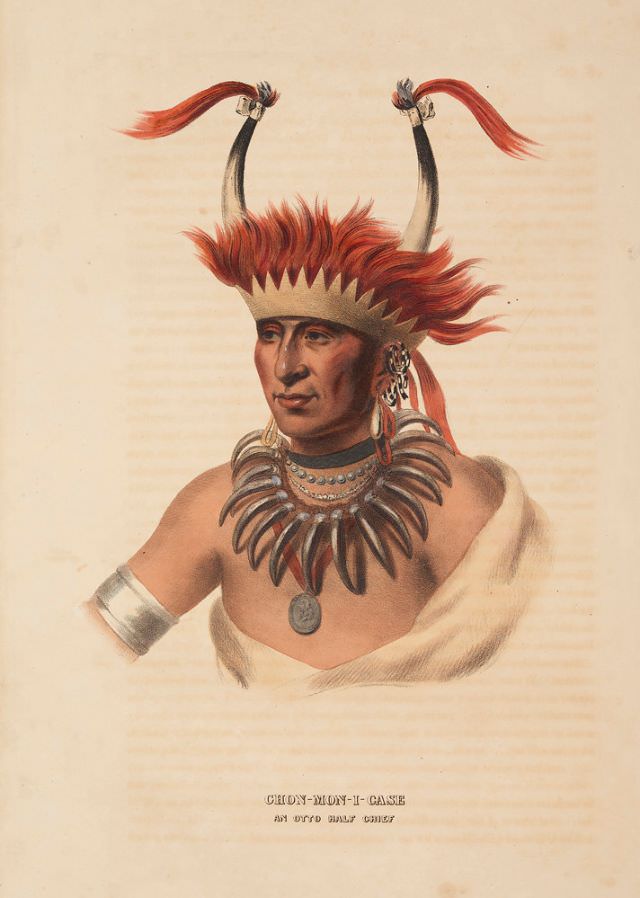
Rendered as a carefully colored portrait, **“Chon-Mon-I-Case, An Otto Half Chief”** presents a dignified bust view that emphasizes regalia and presence over background setting. The figure faces slightly to the side, composed and self-possessed, with the pale field behind him drawing the eye to the details of dress and expression. As an artwork meant for viewing and collecting, it sits in that space where documentation, interpretation, and visual storytelling meet.
Striking elements lead the composition: a tall headdress crowned with upright horns and flowing red plumes, paired with long earrings and a bright pendant at the chest. Around the neck, a dramatic necklace of claw- or fang-like forms creates a strong silhouette, while a draped blanket and arm band suggest layered attire and status. The artist’s attention to color—especially the reds, bone tones, and metallic highlights—adds depth that reads well for visitors searching for Indigenous portrait art and historical illustration.
The title anchors the subject as an Otto leader, inviting readers to consider how such portraits shaped wider perceptions of Native leaders in print culture. Without overloading the scene with props, the image asks us to linger on craftsmanship, symbolism, and the careful presentation of authority. For anyone exploring Otto history, Native American portraiture, or early American art, this post offers a vivid point of entry—and a reminder to read historic artworks with both curiosity and caution.