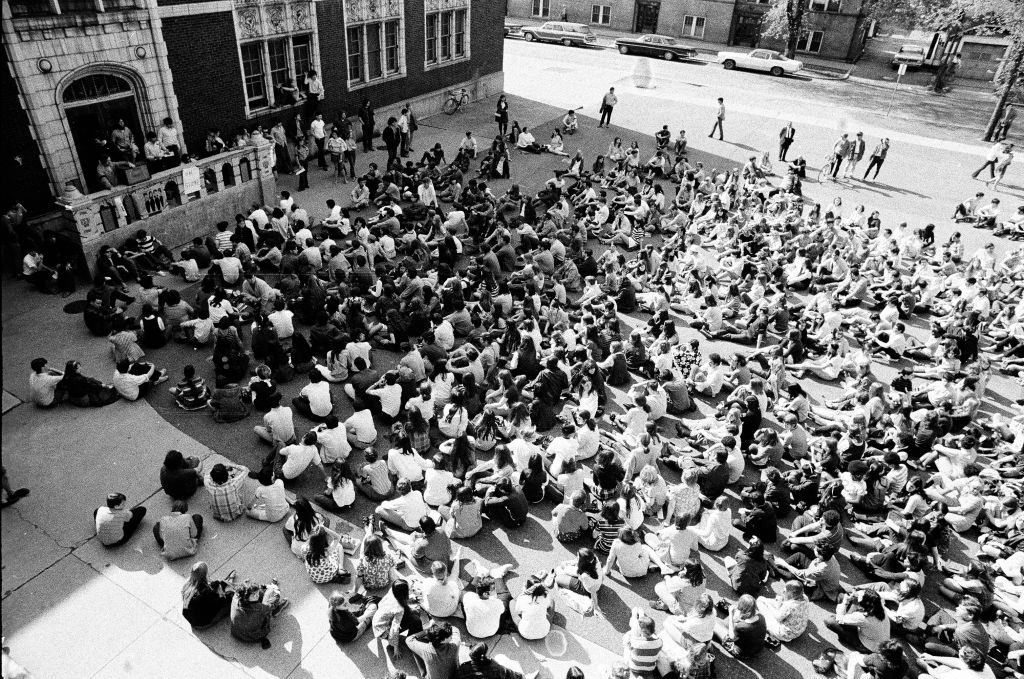
A broad crowd spreads across the pavement outside a campus building in Evanston, gathered for a rally during the student strike that followed the Kent State University shootings on May 8, 1970. From the high angle, the scene reads like a living map of protest—students seated shoulder to shoulder, many facing toward the entrance where speakers appear to address them. Parked cars and the open street beyond frame the moment in everyday Midwestern normalcy, sharpening the contrast between routine life and national crisis.
High school students joining Northwestern University students speaks to how quickly the shock of Kent State rippled beyond college quads and into younger classrooms. The posture of the assembly—calm, attentive, and densely packed—suggests a collective act of witness as much as a demonstration, shaped by grief, anger, and the urgency of the Vietnam War era. Even without legible signs, the photograph conveys the power of bodies gathered in solidarity, turning a familiar campus edge into a public forum.
Seen today, this 1970 student strike rally offers a vivid window into protest culture at the height of American campus activism. It documents intergenerational engagement, the choreography of sit-ins and teach-ins, and the way local spaces became stages for national debates about war, state violence, and democratic dissent. For readers searching for Kent State aftermath, Vietnam War protests, Northwestern University history, or Evanston activism, the image anchors those themes in one charged afternoon.