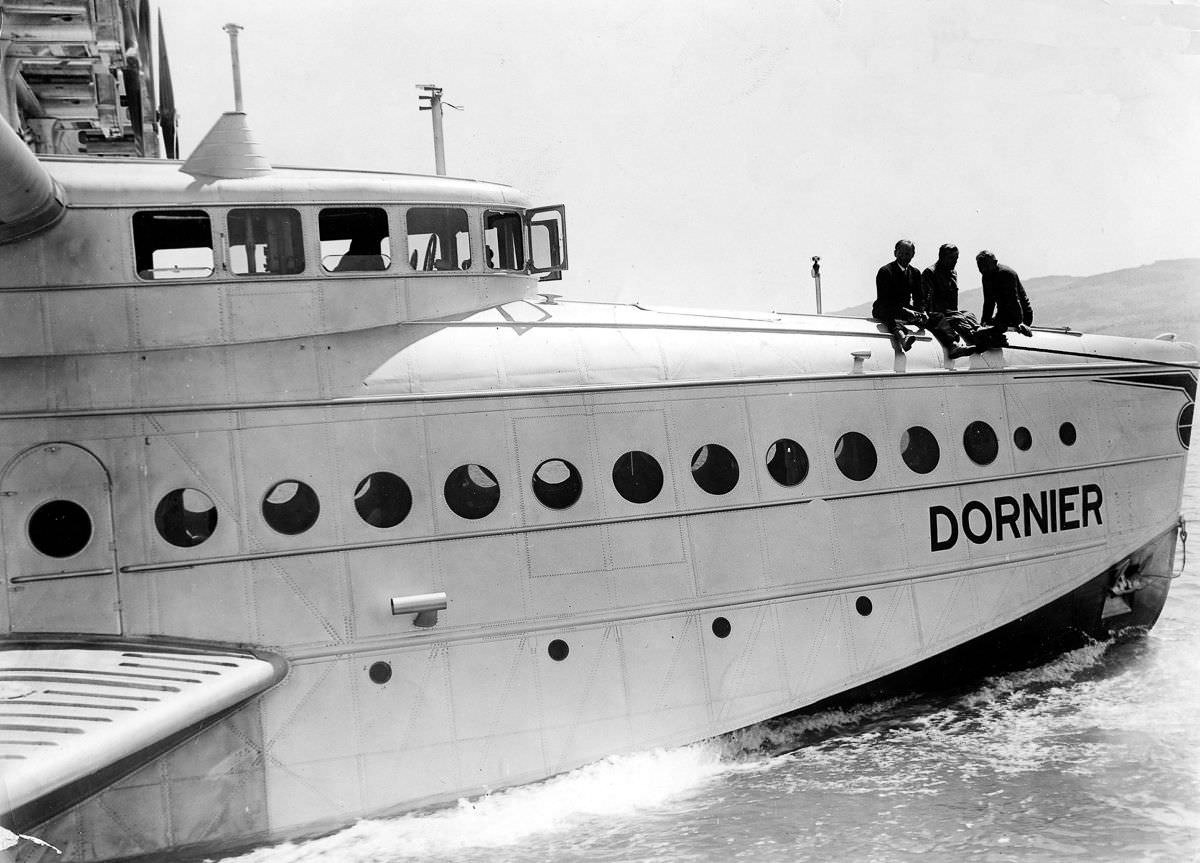
Along the hull of a sleek waterborne aircraft, the name “DORNIER” stands out in bold letters, a proud signature of interwar engineering. A neat row of round portholes marches toward the bow, while the cockpit’s squared windows and riveted metal skin hint at the careful craftsmanship behind early commercial aviation. Three figures sit casually atop the fuselage, their relaxed posture contrasting with the machine’s purposeful lines.
Set against open water and distant shoreline, the scene evokes 1930’s fascination with speed, reach, and modern invention. Flying boats like this were designed to turn seas and lakes into runways, extending air travel beyond the limits of land-based airfields and paving the way for longer routes. Details such as the streamlined superstructure, the spray-kissed side panels, and the orderly window pattern suggest both utility and a budding sense of passenger comfort.
For a WordPress post focused on 1930 inventions, this photo offers a vivid entry point into the era’s transportation breakthroughs, when aviation was rapidly shifting from daring experiment to practical network. It invites readers to look closely at the technology of the time—metal construction, aerodynamic shaping, and the marriage of ship and aircraft design—and to imagine the ambition required to build it. Whether you’re exploring early flight history or the evolution of travel, the image captures a moment when the future seemed to float just above the waves.