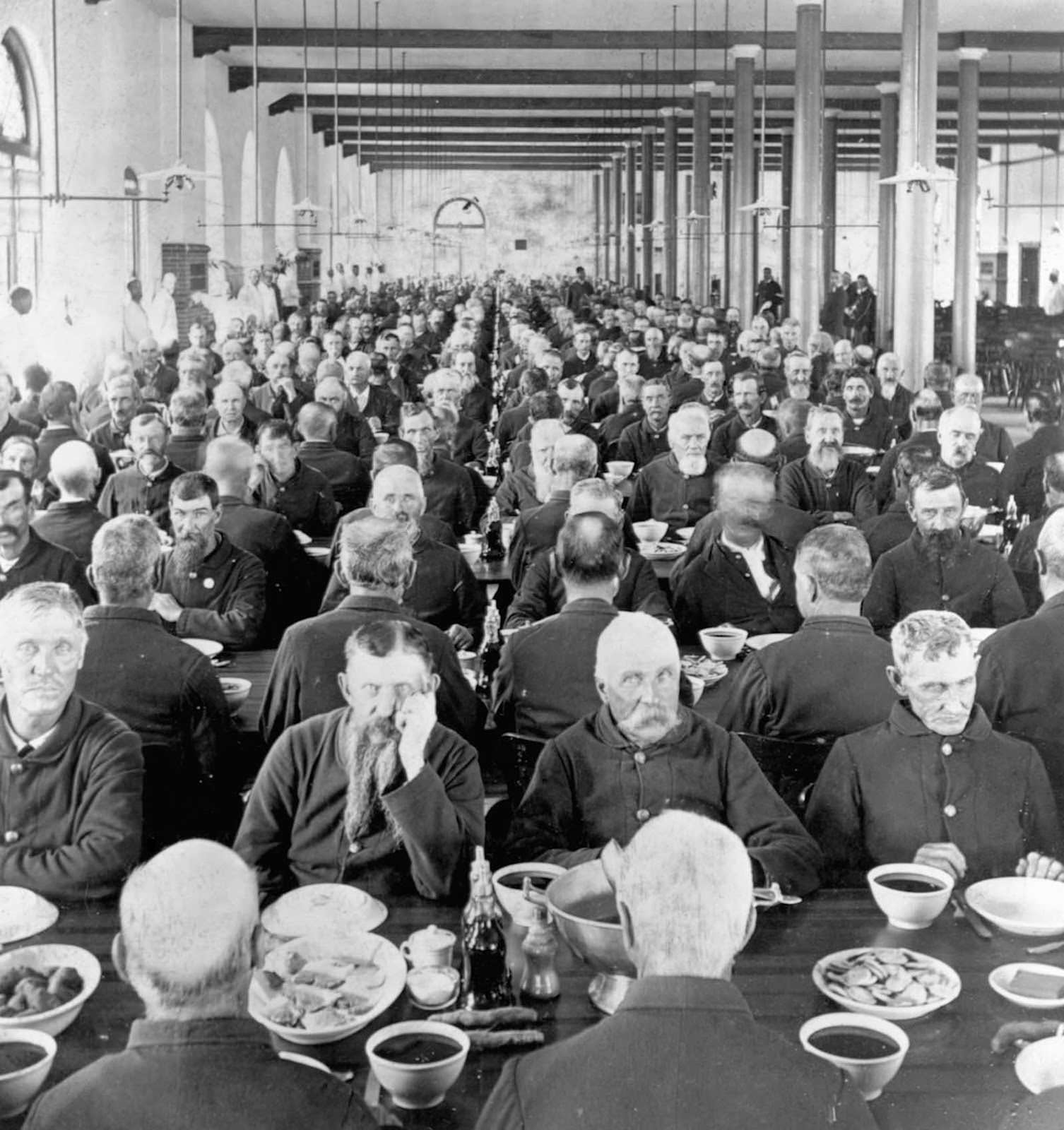
Long tables stretch into the distance inside the dining hall of the National Soldiers’ Home in Marion, Indiana, turning an everyday meal into a striking panorama of veteran life. Rows of elderly men in dark uniform-like jackets sit shoulder to shoulder, their faces weathered and attentive, as crockery and simple place settings repeat down the line. Tall columns, exposed beams, and broad windows create a sense of order and scale, emphasizing how many residents depended on this institution for routine, warmth, and sustenance.
Near the front, bowls of soup, sliced bread, and plates of food sit within arm’s reach, while bottles and serving dishes mark the shared nature of the meal. Some diners look toward the camera with guarded curiosity; others seem lost in conversation or thought, their posture hinting at fatigue and long memory. The visual rhythm—heads, shoulders, tableware, then more heads—conveys both community and regimentation, a reminder that care in the late 19th century often came with strict schedules and communal living.
Marion’s National Soldiers’ Home served disabled American veterans, many shaped by the Civil War, and this 1898 scene quietly testifies to the war’s long aftermath. It’s a powerful glimpse of how the United States attempted to honor service through institutional support, even as age, injury, and poverty gathered in one room. For readers interested in Civil War veterans, Indiana history, and the evolution of veteran care, the photograph offers a rare, human-scale look at what “home” meant after the fighting was over.