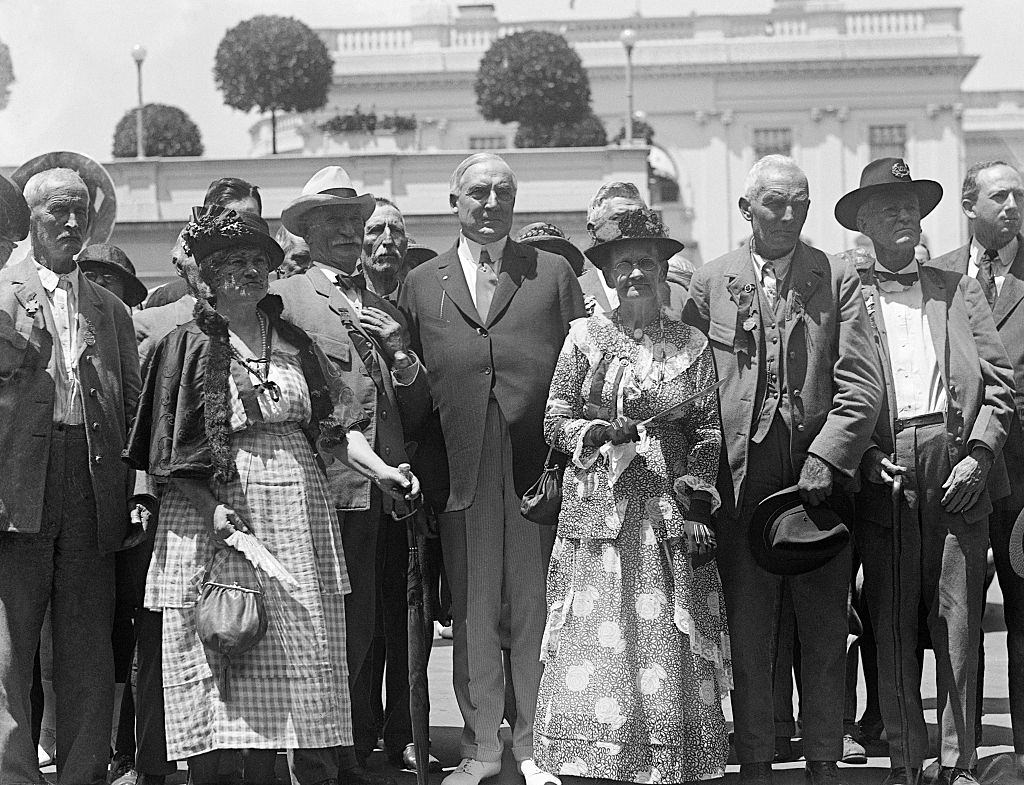
Under the bright sun outside the White House, President Warren G. Harding stands at the center of a tightly packed group whose faces carry the long memory of the Civil War. Elderly veterans and companions crowd close in their best coats and hats, some decorated with reunion ribbons, while a few attendees wear period-style dresses that echo an earlier American era. The composition feels formal yet intimate, as if the camera has caught a brief pause between speeches, handshakes, and the slow shuffle of age.
Harding’s reception of Confederate Army veterans attending their annual reunion in Richmond, Virginia, speaks to how powerfully the conflict continued to shape public life well into the 1920s. By 1922, these men were among the last living links to the 1860s, and their gatherings blended remembrance, pageantry, and politics in a nation still negotiating the meaning of reunion and regional identity. The photo’s contrast—official Washington as backdrop, former soldiers in the foreground—underscores how memory of the Civil Wars remained close to the machinery of government.
Details in the crowd reward a closer look: the stiff brims of wide hats, the careful grip on canes, the medals pinned to lapels, and the steady, unsmiling stares of people posed for an important public moment. The trimmed trees and pale façade behind them situate the scene within the recognizable setting of presidential power, adding weight to the visit. For readers searching for President Harding, Confederate veterans reunion, Richmond 1922, or Civil War memory in America, this historical photo offers a vivid snapshot of commemoration in the early twentieth century.