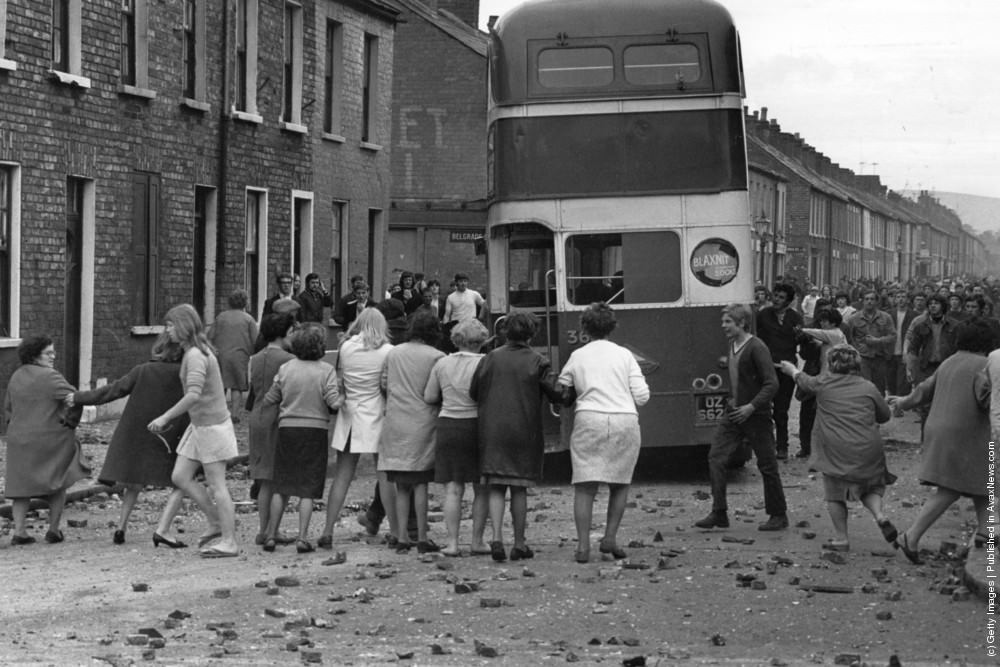
On the Falls Road in Belfast, a double‑decker bus looms like an improvised barricade, its bulk edging backward into a tense human line. Women step forward together across a street littered with stones and debris, their bodies forming a picket aimed not at commerce or wages, but at the violence tearing through their neighbourhood. Behind them, clusters of onlookers hug the brick terraces, watching an ordinary piece of public transport become a weapon of pressure and fear.
The title’s detail—that the bus was commandeered and driven in reverse through the women’s protest—sharpens the scene into a stark snapshot of the riots of 3rd July 1970. Faces and postures suggest urgency: arms stretched out, skirts and coats pulled tight, people bracing as the vehicle inches and the crowd ripples. Even without blood or flames in the frame, the scattered rubble underfoot and the crowded street corridor evoke how quickly civil unrest can turn everyday spaces into contested ground.
For readers searching the history of Belfast riots, the Falls Road disturbances, or women’s roles in street-level peace appeals during the early Troubles, this photograph offers a raw, close-to-the-pavement perspective. It captures not leaders at podiums but residents in the roadway, confronting chaos with presence and solidarity. The image sits within a wider “civil wars” theme, reminding us how community, courage, and coercion can collide within a single, claustrophobic city block.