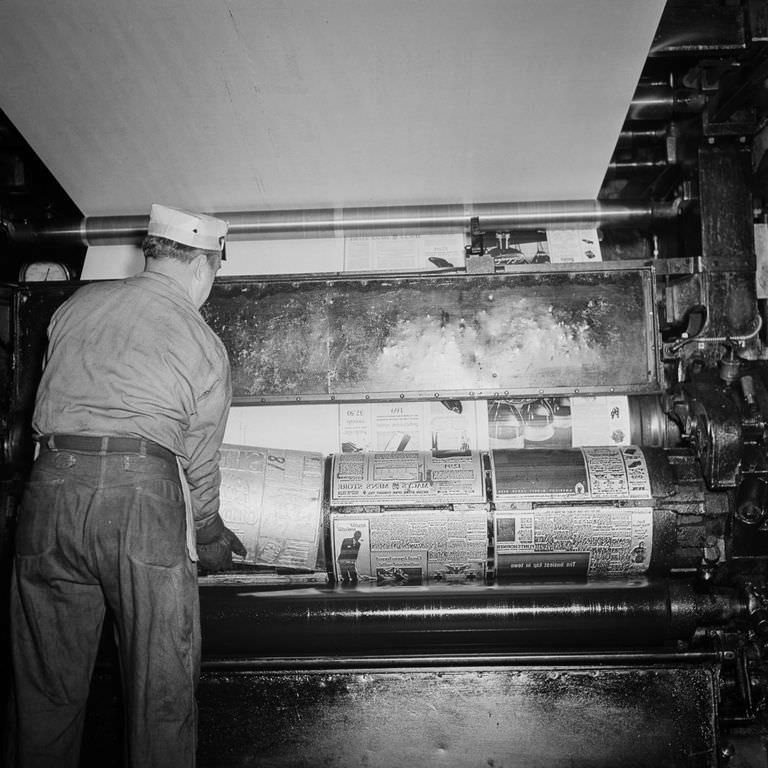
Ink-stained machinery dominates the scene as a pressman stands close to a large printing unit, guiding a flexible plate into position. The curved surface below is already wrapped in text-heavy pages and bold blocks of advertising, hinting at the dense information culture that newspapers and commercial printers fed each day. In the stark light of the shop floor, the act is both careful and physical—hands, metal, and paper aligned so the message can multiply.
Loading plates into the presses was the make-or-break moment of industrial printing, when layout decisions turned into repeatable impressions. The plate had to sit true on the cylinder, its edges secured and its surface smooth, so that every rotation delivered clean lines instead of smears, doubled type, or uneven ink. Seen through the lens of “Inventions,” this process reflects a chain of mechanical innovations: precision rollers, tension systems, and the engineering that made speed possible without sacrificing legibility.
Behind the finished newspaper page lies a choreography of labor that rarely makes it into the public story of publishing. The worker’s posture—focused, steady, close enough to feel the machine’s heat and vibration—speaks to the expertise required to keep presses running and deadlines met. For readers and researchers interested in printing history, press technology, and the evolution of mass communication, this photograph offers a grounded look at how plates became pages, and how pages became a daily habit.