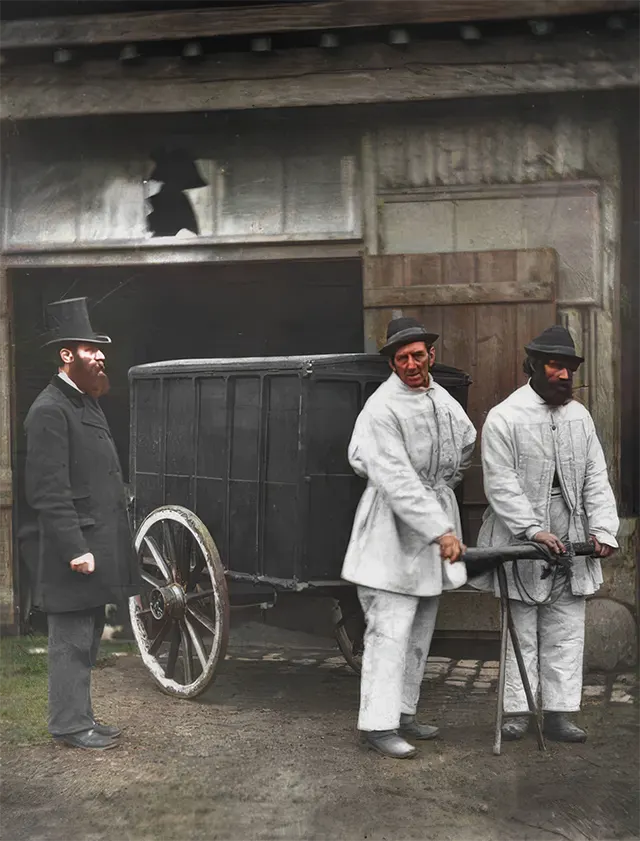
Stiff collars and heavy coats share the frame with workwear that looks built for chemical splashes, hinting at the uneasy mix of authority and hazard that followed a smallpox outbreak in the 1890s. Two public disinfectors stand in pale protective garments, their posture practical and ready, while a suited official lingers nearby as if to supervise the procedure. Behind them sits a sturdy, boxy cart with large wooden wheels—municipal equipment repurposed for crisis response.
The men’s tools and clothing suggest street-level sanitation at a time when germ theory was gaining ground but daily life still ran on cobblestones, horse traffic, and close-quartered housing. Disinfection campaigns like this often meant spraying or scrubbing surfaces thought to harbor contagion, treating doorways, alleys, and public thoroughfares with strong solutions. Even without pinpointing a city, the scene evokes how public health relied on visible labor: crews dispatched to reassure residents that something concrete was being done.
Colorization adds a jolt of immediacy, turning a distant epidemic into a moment that feels almost contemporary—protective gear, municipal oversight, and the pressure to contain spread. Smallpox control also hinged on vaccination and quarantine, yet images of disinfectors persisted because they made prevention look tangible and organized. For anyone searching the history of smallpox outbreaks, 1890s street sanitation, or early public health workers, this photograph offers a grounded glimpse of the people and equipment at the front line of disease control.