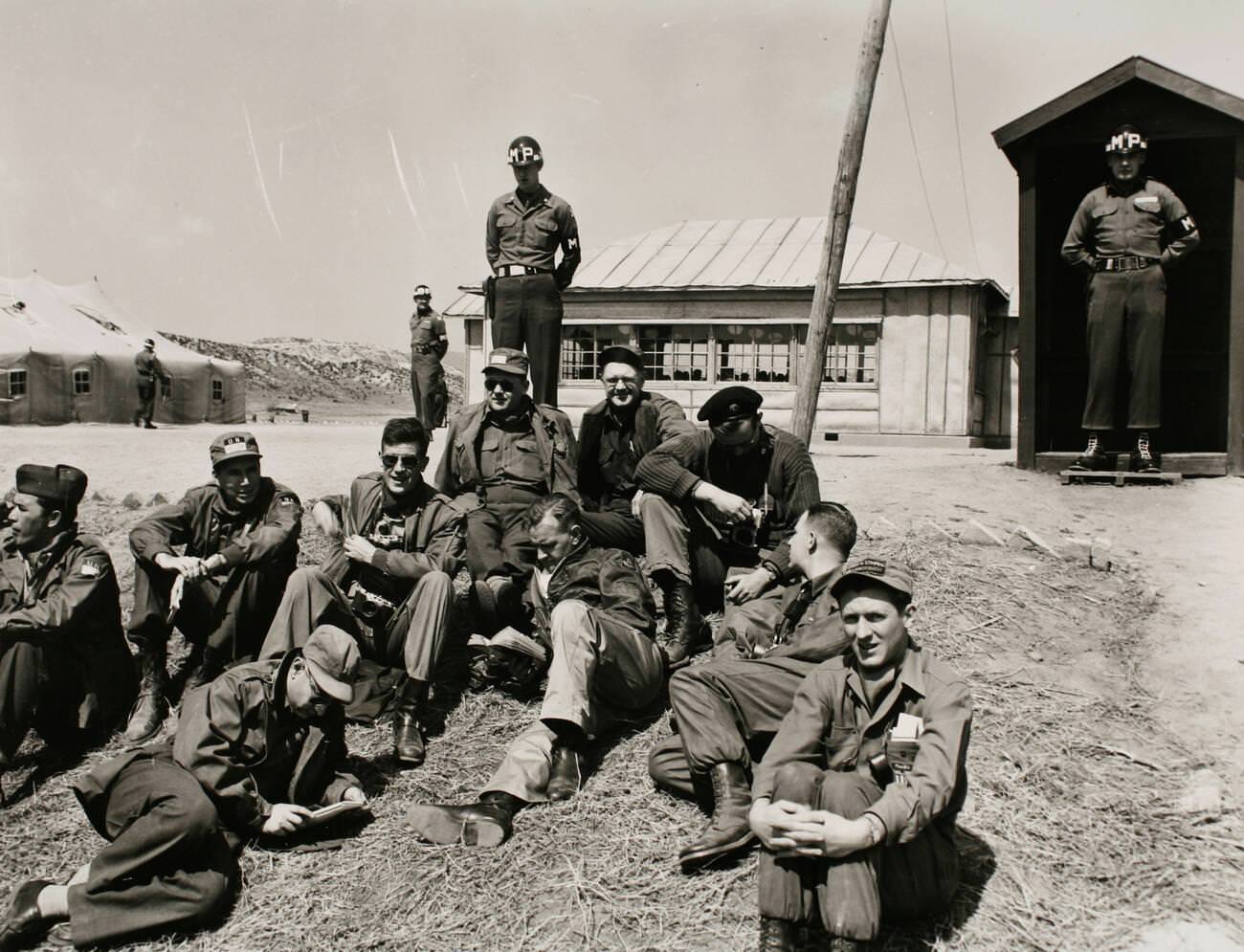
Sunlit and dusty, the compound at Panmunjon feels less like a grand diplomatic stage than a makeshift outpost where history is negotiated in increments. A cluster of United Nations correspondents lounges on straw and bare ground, cameras and notebooks close at hand, waiting for the next round of prisoner of war discussions in Korea. Behind them, simple huts and canvas tents sit under a wide sky, while military police stand watch with “MP” marked clearly on their helmets.
The journalists’ relaxed postures hint at long hours of delay—briefings postponed, doors closed, statements measured—yet their attention never truly drifts. In 1953, the POW question was among the most contentious issues of the Korean War armistice talks, and every rumor or procedural change could reshape headlines around the world. The scene captures that in-between time when reporting becomes endurance: waiting, listening, comparing notes, and preparing to file the moment the talks resume.
What makes the photograph resonate is its contrast between stillness and stakes, ordinary bodies at rest against the backdrop of extraordinary decisions. Guard posts and uniforms frame the correspondents, reminding us that even press access unfolded under strict control in a heavily monitored zone. For readers searching Korean War history, Panmunjon negotiations, or the role of war correspondents, this image offers a grounded glimpse of how global diplomacy looked from the dirt-level vantage point of those sent to witness it.