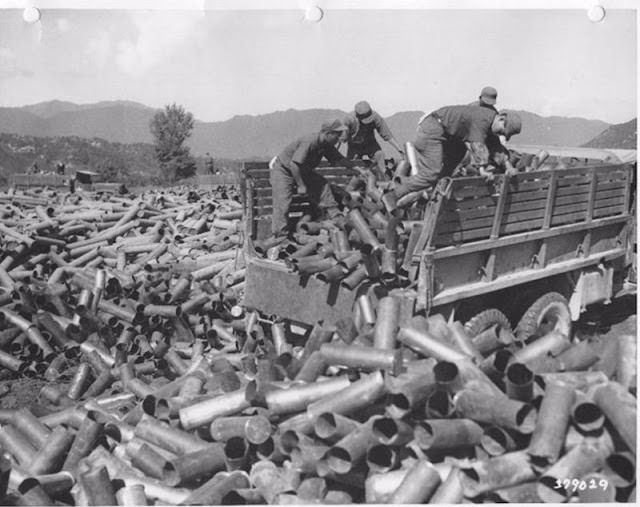
Steel cylinders blanket the ground in a startling tide of spent artillery casings, while Republic of Korea soldiers work from the bed of a military truck to shovel, lift, and dump the brass-and-steel remnants into a growing pile. The scene is busy and physical—men leaning over the sideboards, arms extended, bodies braced—turning the aftermath of gunfire into an organized cleanup. In the distance, low mountains and open sky frame the work, a quiet backdrop to the material evidence of sustained bombardment.
The 1950s context suggested by the title places this moment in the era of the Korean War and its immediate aftermath, when artillery dominated many engagements and left behind mountains of expended shells. What looks like mere debris was also a logistical concern: casings had to be cleared from firing areas, collected for disposal or recycling, and accounted for amid constant movement of units and supplies. Photographs like this highlight a side of conflict that seldom makes headlines—the labor of maintenance, salvage, and order that follows every barrage.
For readers exploring Korean War history, ROK soldiers, or artillery logistics, the image offers a vivid reminder that war reshapes landscapes not only through craters and ruins but through accumulation: metal, packaging, and fuel cans, gathered and redistributed by hand. The truck, the heaps of casings, and the coordinated teamwork underline a practical reality of mid‑20th‑century warfare, where even “spent” material retained value and demanded attention. It’s a grounded, unsentimental view of soldiers’ daily tasks, bridging battlefield action and the unglamorous work that keeps an army functioning.