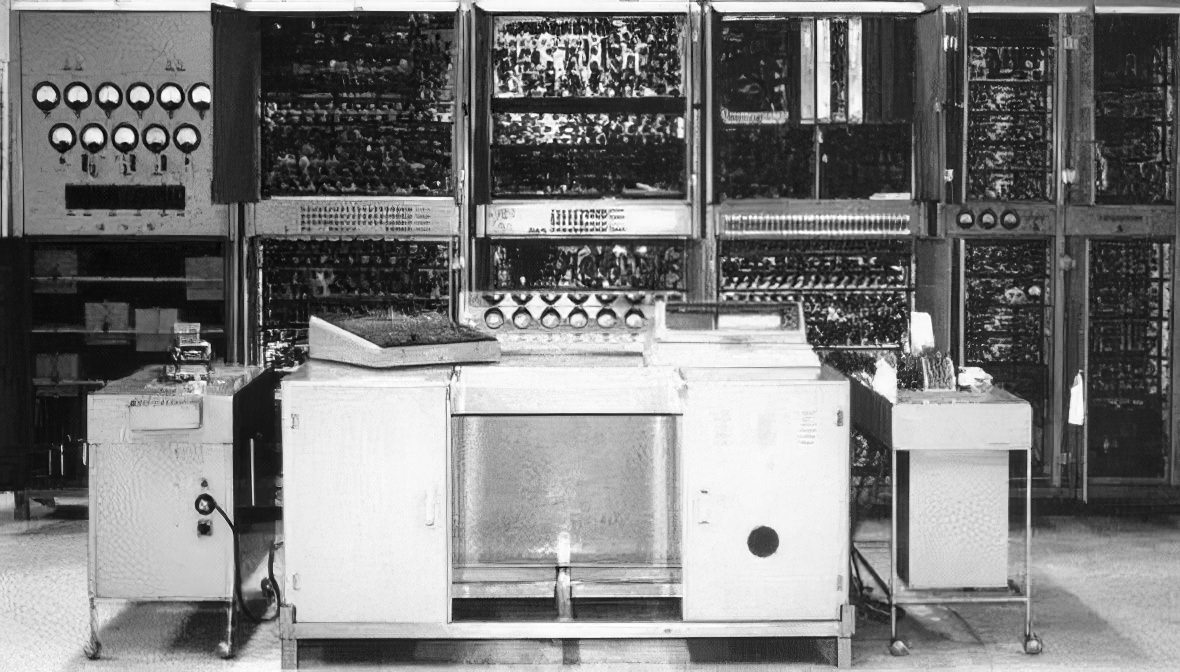
Banks of electronics fill the room behind a sturdy central console, where dials, meters, and densely packed panels hint at the constant attention early computing demanded. The scene feels closer to an industrial control station than the sleek devices we associate with computers today, yet every cable run and instrument face speaks to calculation made physical. For readers interested in inventions and the origins of digital technology, the photo offers a striking glimpse of how large and hands-on Australia’s first computer really was.
CSIRAC—remembered as Australia’s first computer—took its name from CSIR, originally the “Council for Scientific and Industrial Research,” and the expanded acronym reflects an era when national research bodies drove technological leaps. Before software became a household word, computing was embedded in hardware: racks of components, diagnostic readouts, and a workspace designed for technicians who listened, measured, and adjusted as part of everyday operation. Even without pinpointing a specific date or site from the image alone, the equipment’s scale and complexity place it firmly in the pioneering decades of electronic computing.
Seen today, the photo doubles as a reminder that early computers were not personal tools but institutional machines, built to serve scientific and administrative needs with painstaking precision. The orderly arrangement of cabinets and controls suggests a system where reliability came from careful engineering and constant monitoring rather than miniaturization. As a WordPress feature on CSIRAC and Australian computing history, this image anchors the story in tangible detail, helping modern audiences visualize the roots of the digital world.