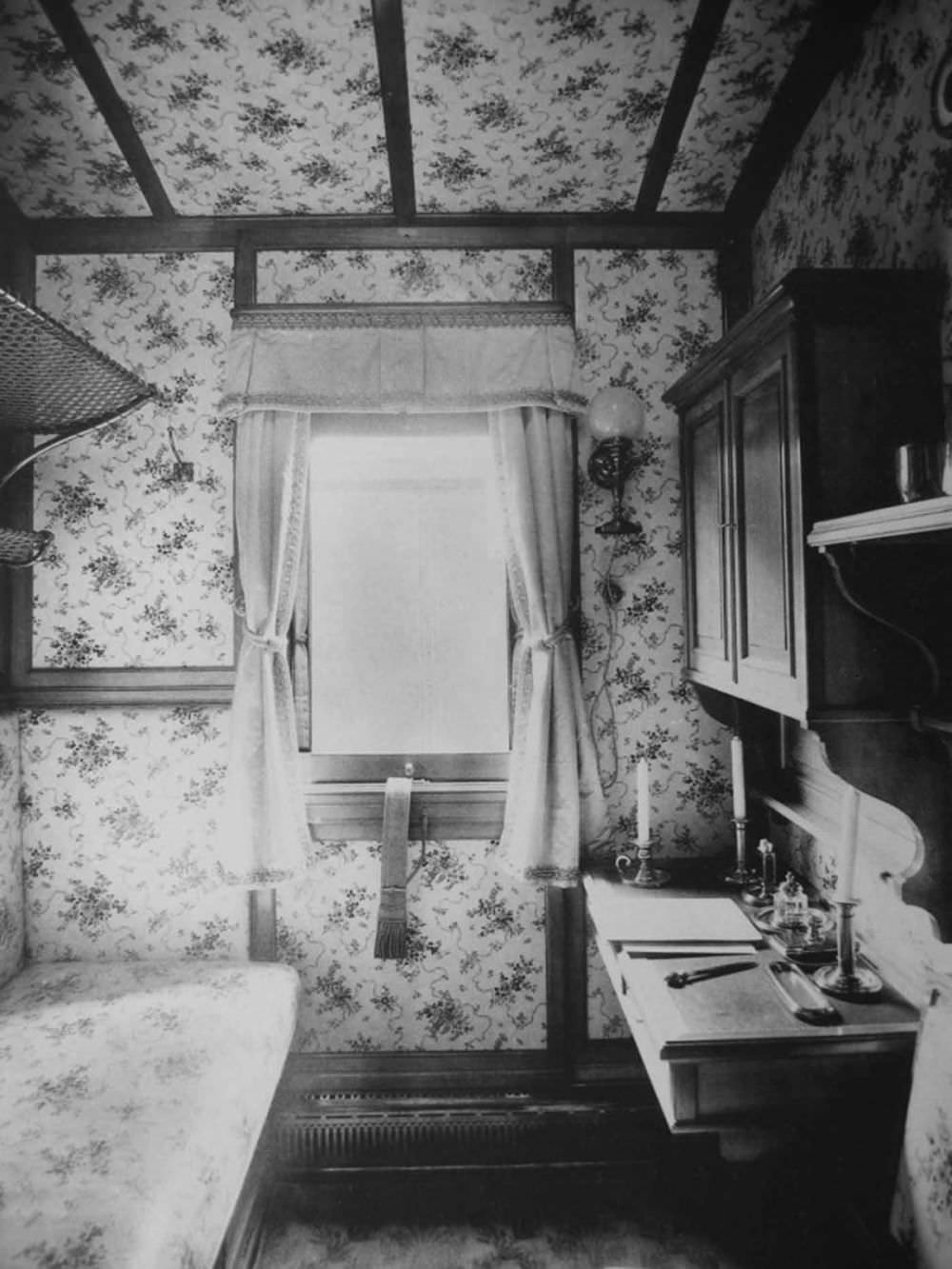
Tucked beneath a patterned ceiling and floral wallpaper, this small “office” feels more like a private alcove than a workplace, the sort of nook where wedding plans could be kept close at hand. A bright window framed with lace-trimmed curtains anchors the room, while dark wood beams and trim give the space a deliberate, crafted order. The title, “Office for the maid of honor,” invites you to imagine lists, letters, and last-minute decisions unfolding in a quiet corner away from the bustle.
Along the right wall, a compact desk and hutch suggest a place for careful writing and storing papers, with a lamp and tidy tabletop items arranged for use rather than show. The scene hints at an era when organization relied on pens, paper, and good light, and when domestic interiors doubled as administrative spaces for family events. Even the presence of a nearby bed or daybed reinforces the sense of a multipurpose room—part rest, part readiness.
For readers drawn to historical interiors, vintage home offices, and the material culture of celebrations, the photograph offers rich detail: textiles, woodwork, and furniture scaled for a modest footprint. It also speaks to the often-unseen labor behind ceremonies, where a maid of honor might manage correspondence, schedules, and small “inventions” of practicality that keep everything moving. Use this image as a springboard for exploring how everyday rooms were adapted to the demands of social life, long before dedicated home offices became common.