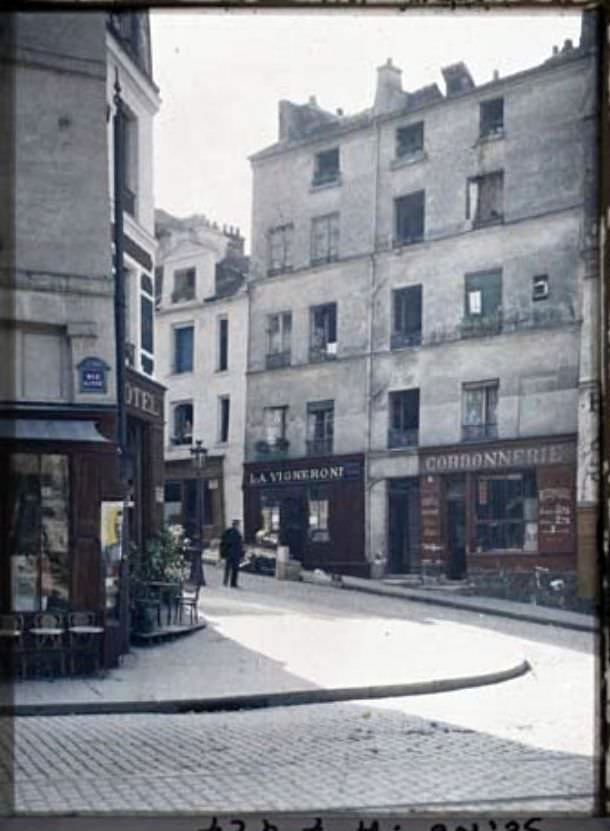
At the corner of Place Jussieu, where Linnaeus and Bakers meet, the street opens into a small, lived-in stage of urban Paris. A gentle curve of cobblestones leads the eye past tall, timeworn façades, their plaster mottled and their windows unevenly spaced, suggesting buildings that have been adapted and repaired over generations. The colorization lends a quiet immediacy to the scene, softening the hard edges of masonry and making the light feel closer to the way passersby once experienced it.
Shopfront lettering anchors the view in everyday commerce: “LA VIONNET” sits beside a boldly marked “CORDONNERIE,” a shoemaker’s workshop whose presence hints at constant foot traffic and the practical needs of a neighborhood. A hotel sign peeks from the left, while a few figures stand near the curb, small against the height of the buildings and the broad sweep of the street. Details like the street sign, the worn shutters, and the modest awnings evoke a working quarter where errands, repairs, and short conversations shaped the rhythm of the day.
Stéphane Passet’s photograph, presented here through careful colorization, is more than a record of architecture—it’s a portrait of a corner that once balanced residence and trade in close quarters. The restrained palette draws attention to textures: sunlit paving, shaded doorways, and the faded paint of storefronts that once competed for attention. For readers searching for Place Jussieu history, early street photography, or Paris neighborhood life, this image offers a vivid glimpse into the ordinary cityscape that underpinned the capital’s larger story.