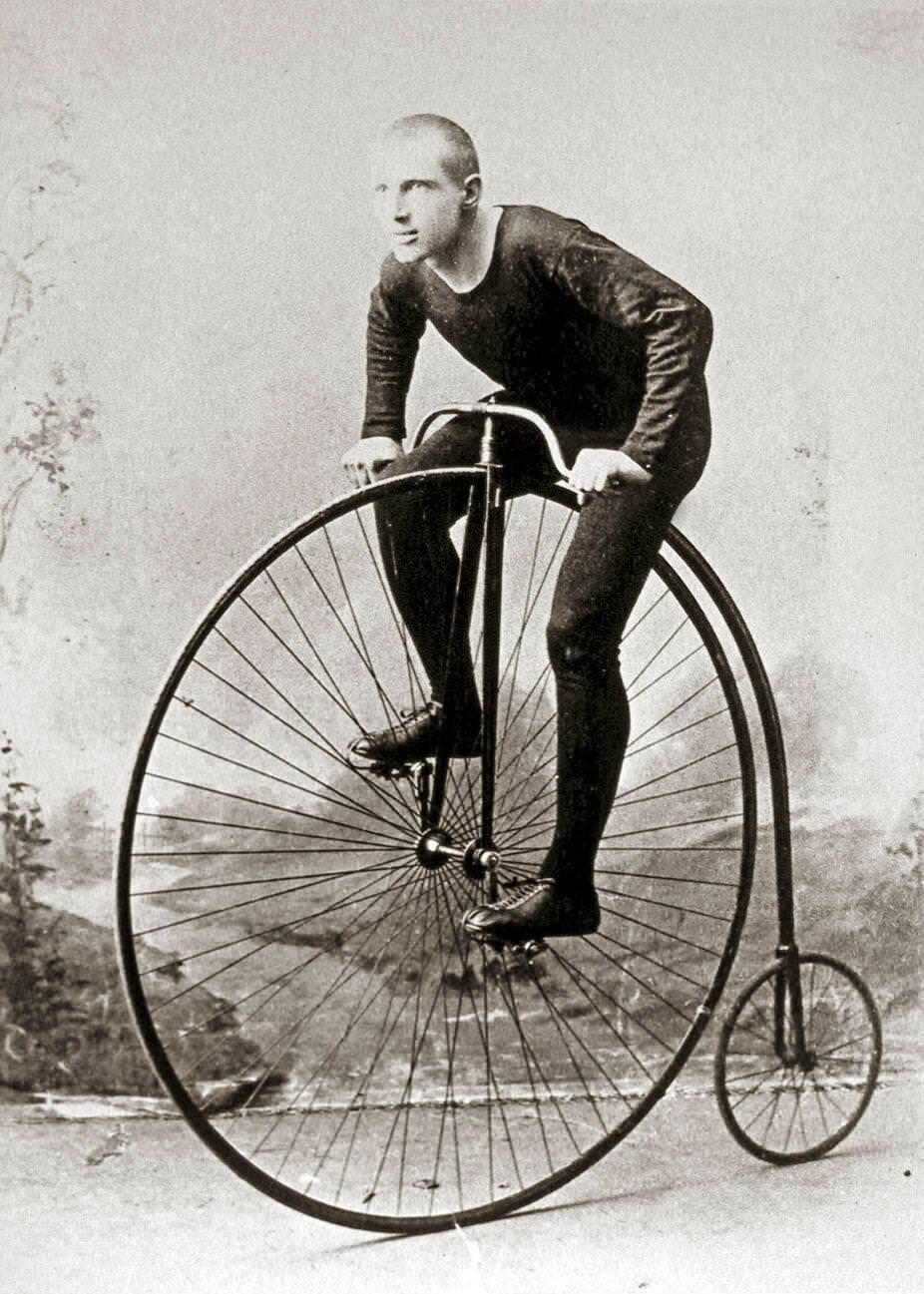
Perched high above the ground, a rider leans forward on a towering high-wheel bicycle, the oversized front wheel dominating the frame while the tiny rear wheel trails behind like an afterthought. The plain studio backdrop keeps attention on the machine’s stark geometry—thin spokes, narrow tires, and a minimalist frame that looks both elegant and precarious. Even without a known town or street, the title’s Germany setting and circa-1905 estimate place this portrait in an era when modern mobility was being tested, celebrated, and photographed.
High wheel bicycles were as much a statement as a means of transport, and the pose here suggests pride in balance and control. The pedals fixed to the large wheel hint at how speed and stride depended on wheel size, rewarding confidence while punishing mistakes on rough surfaces. Clothing and posture reinforce the sense of performance: this is someone presenting an invention in action, not merely standing beside it.
As “safer” bicycle designs became widespread, images like this helped preserve the brief moment when height itself was part of the thrill. For readers exploring early cycling history, German technology, or turn-of-the-century inventions, this photograph offers a vivid reminder that progress often arrived in bold, imperfect steps. With the location unknown, the scene becomes a universal snapshot of experimentation—an intimate encounter between person, machine, and the daring optimism of the early 1900s.