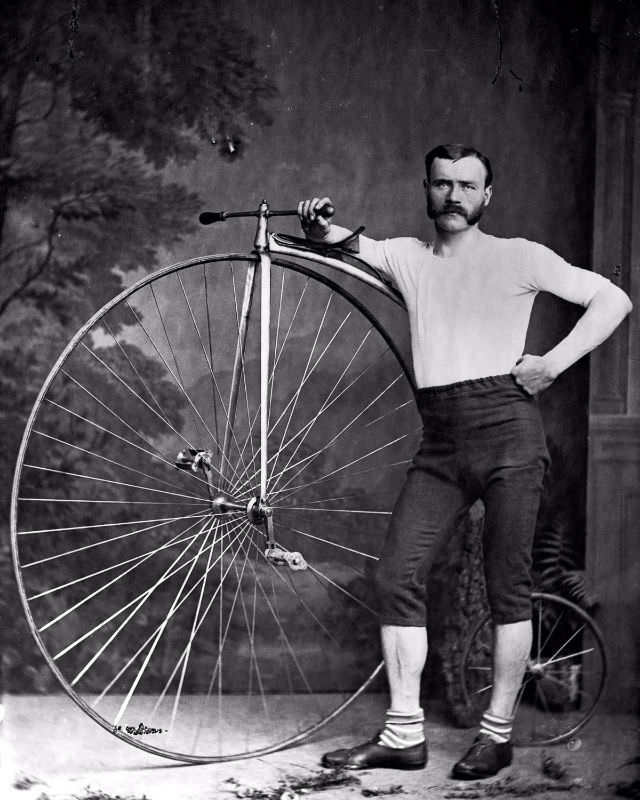
Leaning with easy confidence against a towering penny-farthing, a mustached cyclist poses in a studio-like setting where a painted backdrop softens the hard geometry of spokes and steel. The oversized front wheel dominates the frame, turning the rider into a scale marker and reminding modern viewers just how high—and how precarious—early cycling could feel. Even without a stated place or date, the careful posture and crisp clothing suggest pride in both athleticism and innovation.
The machine itself tells the story of invention: direct-drive pedals fixed to the hub, a slim fork, and that immense wheel designed to translate each turn into maximum distance. Details like the narrow tire, minimal frame, and compact rear wheel highlight an era before chains and gears became standard, when speed was pursued through circumference rather than mechanical advantage. For anyone searching vintage cycling photographs or the history of the penny-farthing, the image delivers a clear look at the engineering logic—and its daring trade-offs.
Beyond mechanics, the portrait hints at a broader “bicycle boom” culture where new technologies were displayed almost like trophies. The rider’s relaxed stance beside the high wheeler reads like a personal endorsement, blending sportsmanship with the novelty of modern transport. As part of “The Penny-Farthing Era Captured in Timeless Vintage Cycling Photographs Inventions,” this scene preserves the moment when two-wheeled travel felt experimental, stylish, and just a little bit fearless.