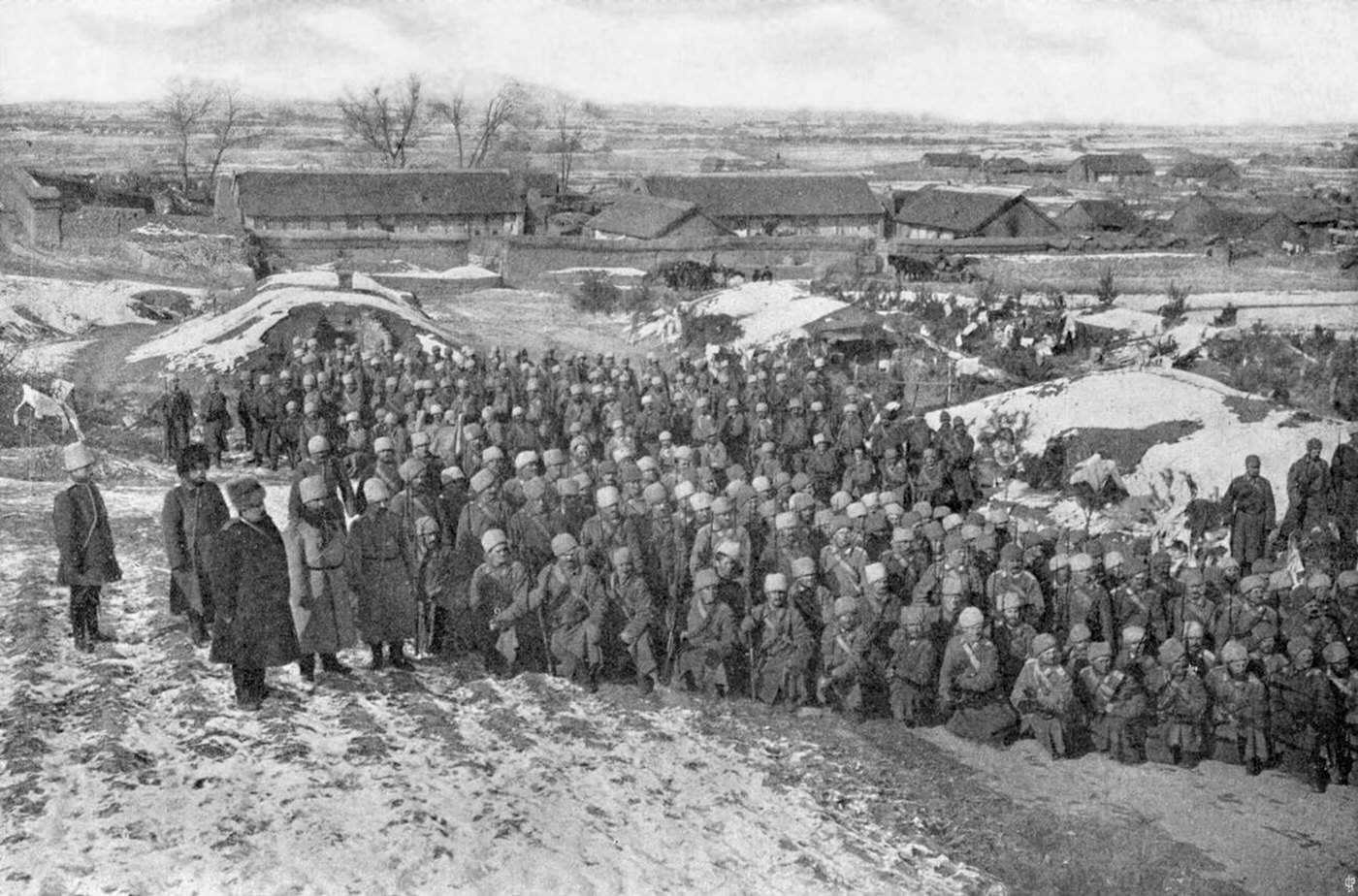
Rows of uniformed men gather on a snow-streaked rise, their fur caps and heavy coats forming a dense pattern against the pale ground. A few figures stand apart at the edge—likely officers or instructors—watching the formation as it settles into order. Behind them, low buildings and bare trees frame a rural backdrop, hinting at the improvised camps and staging areas that often surrounded wartime training.
Set in the 1900s during the Russo-Japanese War, the scene speaks to the scale of mobilization and the discipline demanded of a Cossack regiment preparing for service. The drill is not shown as a heroic charge but as the quieter labor of war: assembling, aligning, waiting for commands, and learning to move as a unit. Even without hearing it, one can imagine the clipped instructions carried over the winter air and the crunch of boots on frozen soil.
For readers exploring wars and military history, this historical photo offers a grounded look at early 20th-century Russian forces beyond the battlefield headlines. Details like the packed ranks, the seasonal landscape, and the utilitarian settlement in the distance help place the regiment within the everyday logistics of campaigning. It’s a compelling window into how armies were organized and readied during one of the era’s pivotal conflicts.