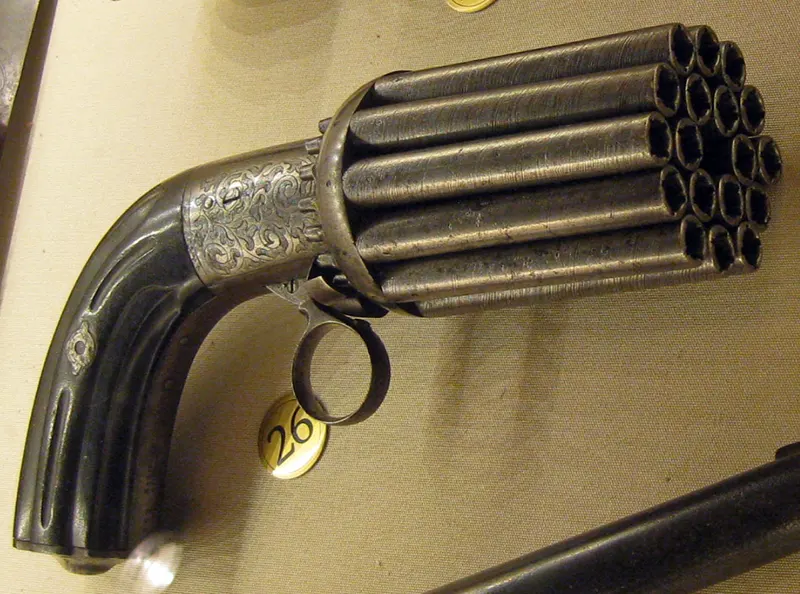
Bristling with a cluster of short barrels at the muzzle, this 1800s multiple-barrel firearm sits at the crossroads of ingenuity and anxiety—an era when inventors chased greater firepower without yet having the sleek reliability of later repeating arms. The bundled tubes create a striking “bouquet” profile, suggesting a weapon designed to deliver several shots in quick succession, whether by rotating, indexing, or firing in sequence depending on the mechanism hidden behind the metalwork. Even at a glance, it reads as an experiment in volume of fire: more barrels, more potential discharges, and fewer pauses to reload.
Curving into a pistol-like grip, the frame is finished with decorative engraving that contrasts sharply with the utilitarian mass of iron at the front. A prominent ring trigger hangs beneath the action, while the barrel cluster dominates the silhouette and shifts the viewer’s attention to the business end of the design. The combination of ornament and brute engineering is part of what makes antique firearms so compelling for historians and collectors alike—tools of their time that were also objects meant to be displayed, discussed, and admired.
Placed under the broad theme of “Inventions,” the photograph invites a closer look at how nineteenth-century weapon designers solved problems with the materials and machining methods they had on hand. Before modern magazines and standardized cartridges became widespread, “more barrels” was one practical answer to the demand for rapid shots, and it produced some of the most memorable—and sometimes unwieldy—firearm forms ever built. For readers interested in 1800s weapon technology, early repeating concepts, and unusual antique guns, this piece offers a vivid snapshot of experimentation on the path toward modern firepower.