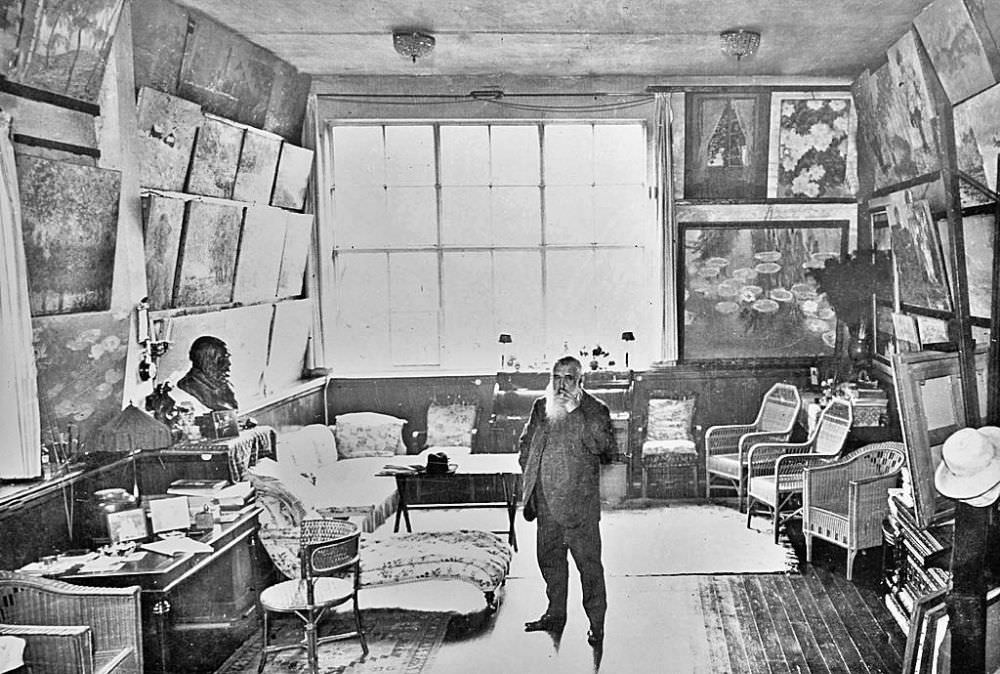
Light floods a spacious studio where canvases lean in dense ranks against the walls, turning the room into a gallery-in-progress. A bearded figure stands near the center, dwarfed by stacked works and large framed paintings that echo the garden subjects associated with Giverny. Wicker chairs, a sofa, and scattered furnishings soften the workspace, suggesting a lived-in sanctuary rather than a pristine atelier.
Along the perimeter, finished and unfinished artworks compete for attention: floral panels, landscape impressions, and a prominent scene of water lilies that immediately evokes Claude Monet’s most celebrated motif. The oversized window dominates the far wall, a practical engine for painting that would have shaped color, shadow, and the daily rhythm of work. Even in monochrome, the photograph hints at the artist’s obsession with light—captured not on a single canvas, but embedded in the very architecture of the studio.
Giverny was more than a backdrop for Monet; it functioned as a carefully cultivated world where studio practice and garden design fed each other in a continuous loop. This post invites readers to linger over the details—piled canvases, intimate seating, and wall-to-wall imagery—and imagine how the private “eden” of home became a generator for iconic Impressionist artworks. For anyone searching Claude Monet studio photos, Giverny gardens inspiration, or the origins of the water lilies paintings, this scene offers a rare, tactile bridge between place and masterpiece.