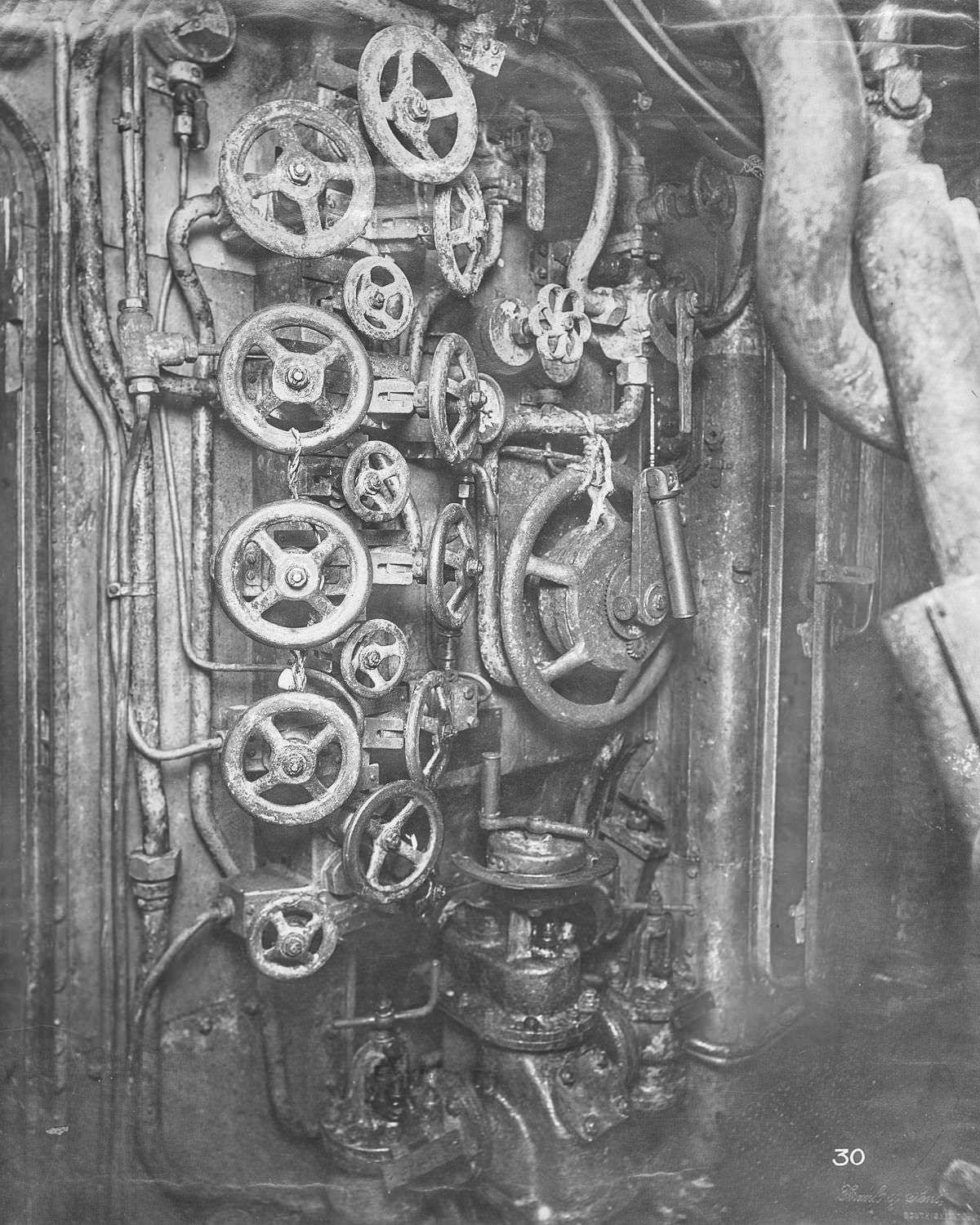
A dense cluster of handwheels and valves fills the frame, the kind of mechanical “dashboard” that once translated human touch into controlled airflow and stable pressure. Looking forward to port, the control room appears less like a desk of instruments and more like a living wall of pipes, joints, and fittings, each line leading to another component that had to work in concert. The worn metal surfaces and layered grime hint at constant use, routine adjustments, and the unglamorous labor that kept complex systems running.
Along the left side, multiple wheels repeat in different sizes, suggesting separate circuits or finely stepped regulation—temperature here, pressure there—each one a small decision with immediate consequences. The larger wheel to the right anchors the arrangement, surrounded by thicker piping and robust housings that imply higher loads or more critical functions. Even without readable labels, the layout speaks to an era of engineering when feedback came through resistance in the handle and vibration in the pipe, not through digital screens.
For readers interested in inventions and industrial history, this photograph is a compact lesson in early control technology and the craft of mechanical regulation. It evokes shipboard or plant environments where stability depended on skilled operators who knew how far to turn a wheel by feel and sound. As an SEO-friendly glimpse into a historic control room, it highlights the ingenuity behind air temperature and pressure control—an essential, often overlooked foundation of modern comfort and safety systems.