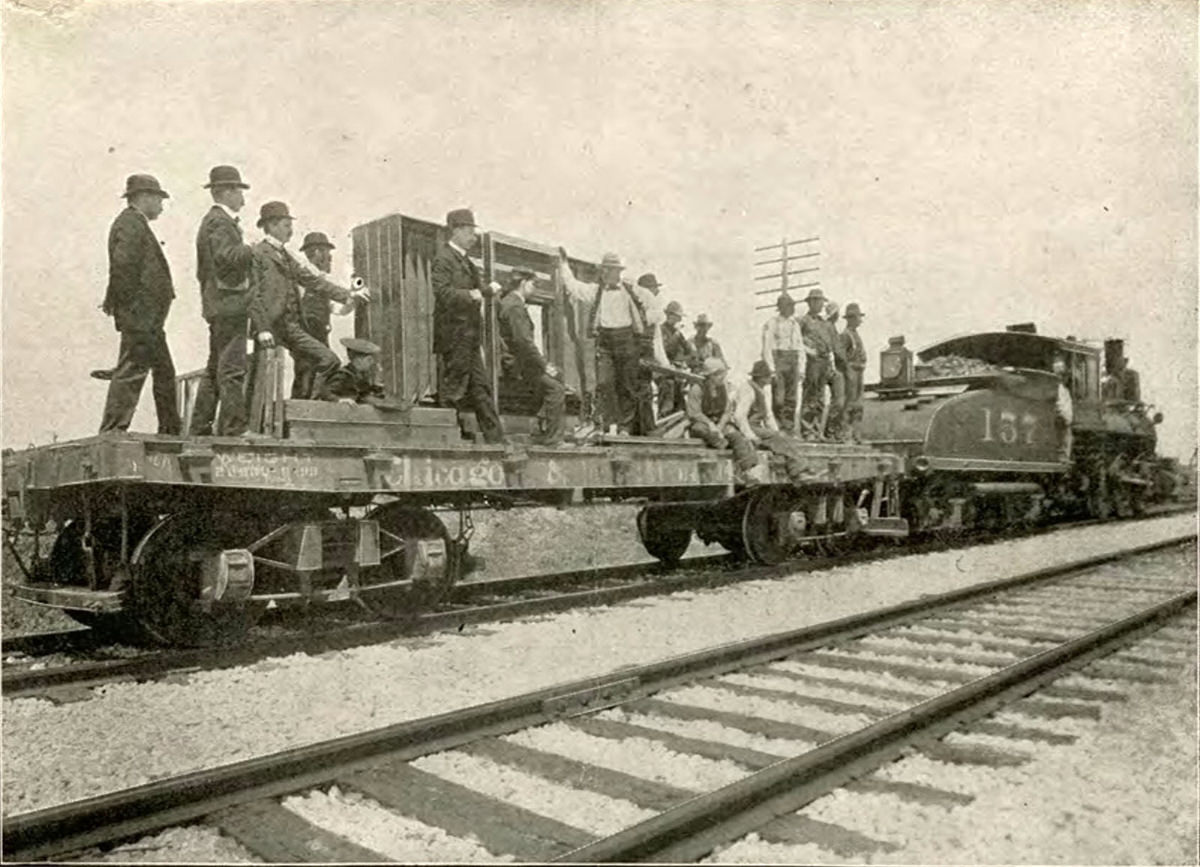
Railway tracks cut across the foreground as a steam locomotive hauls a flatcar loaded with an unusually precious piece of cargo: a large, boxy camera rig and its crate-like housing. Men in brimmed hats crowd the car, standing guard and lending hands, while bottles, tools, and bundled gear ride alongside—small clues to the practical world of early photographic invention. The scene feels half industrial transport, half traveling workshop, with the rail line serving as the fastest road available.
Getting a camera to a shoot was once an operation, not a quick walk with a shoulder bag. The equipment here appears tall and heavy, the kind of oversized apparatus that demanded sturdy platforms, careful bracing, and extra eyes to keep it steady. Even without a clear place name or date, the image speaks to an era when mechanical reliability, manpower, and logistics shaped what could be photographed and where.
Behind every finished historical image sits a story like this one—of planning, hauling, and improvising in the open air. For readers interested in inventions, early cinema and photography, or railroad history, this photograph highlights the infrastructure that made visual documentation possible. It’s a reminder that the march of imaging technology was built not only in laboratories, but also on working rails and crowded flatcars headed toward the next shot.