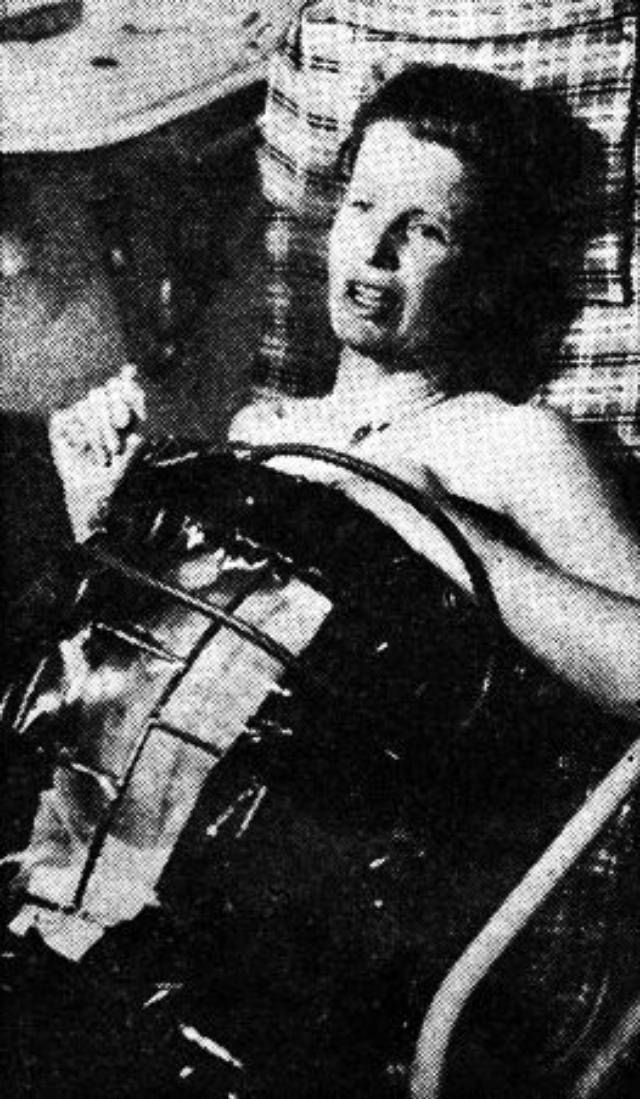
Mid-century optimism about technology spills into the home in this striking 1959 scene, where an expectant mother reclines with a rigid, dome-like device secured around her belly. Tubes and straps suggest a contraption meant to regulate comfort—part medical experiment, part consumer gadget—evoking the era’s fascination with “space age” design applied to everyday life. The result looks less like clothing and more like a personal capsule, inviting curiosity about what problem inventors believed they could solve with plastic, pressure, and hardware.
In the postwar years, pregnancy was increasingly discussed through the language of modern science, and inventions like this so-called “Baby Machine” promised relief, safety, or better monitoring with the push of a button. The photo’s grainy texture only heightens the uncanny effect: a calm human face framed by an apparatus that turns motherhood into a system to be engineered. It’s an image that sits at the crossroads of maternal care, marketing, and the broader cultural drive to mechanize the body.
Looking back, the “space suit” idea reads as both hopeful and revealing—an attempt to make pregnancy more manageable, yet also a reminder of how quickly innovation can slide into spectacle. For readers interested in retro inventions, women’s history, and the odd corners of 1950s technology, this photograph offers a vivid glimpse into the promises and anxieties of the age. Whether it was ever practical matters less than what it represents: a moment when the future seemed wearable, even in the most intimate parts of life.