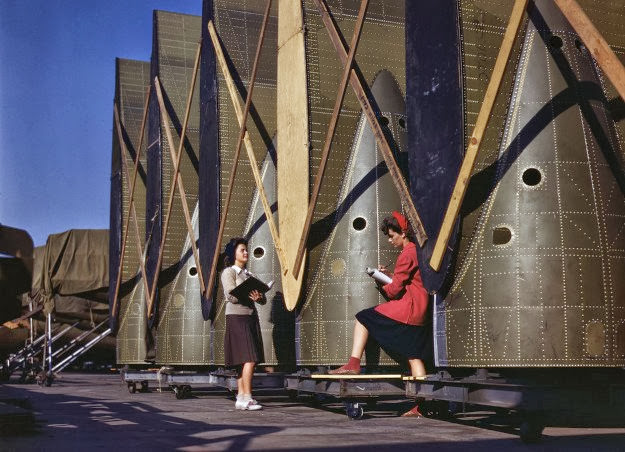
Along a sunlit stretch of tarmac at the Douglas Aircraft Company in Long Beach, California, aircraft components stand in a row like enormous ribs, their metal skins patterned with rivet lines and inspection markings. The title points us to the inner wings for a cargo transport, and the scale is unmistakable: each panel dwarfs the workers beside it, while diagonal wooden braces and wheeled dollies hint at how carefully these sections were handled between shop floor and assembly line.
Two women inspectors occupy the foreground, clipboards in hand, turning an industrial routine into a quietly dramatic moment of wartime production. One balances on a low platform to reach a seam, the other studies her notes at ground level, suggesting a methodical back-and-forth between what’s on paper and what’s in front of them. Details like work shoes, rolled sleeves, and the precise placement of their bodies against the wing structure underline the physicality of quality control, where small flaws could have big consequences.
Colorization adds immediacy to this 1942 scene, bringing out the contrast between blue sky, muted alloy, and the practical, everyday tones of workplace clothing. Beyond the human story, the photo serves as a rich record of World War II-era aircraft manufacturing—mass production, standardized parts, and the constant emphasis on inspection and reliability. For readers interested in Douglas Aircraft history, women in wartime industry, or the behind-the-scenes making of cargo transports, this image offers a crisp, searchable glimpse into how victory was built one rivet line at a time.