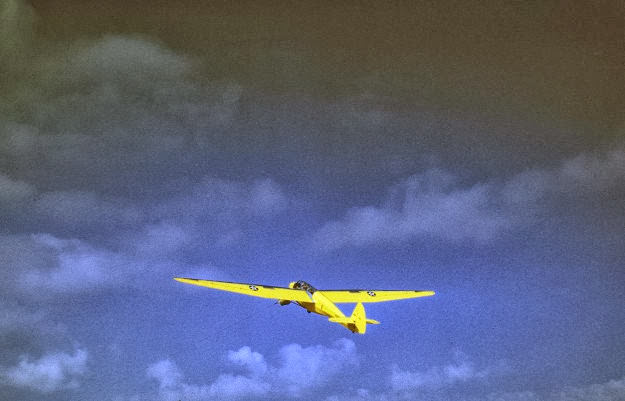
High above the familiar grounds of Parris Island, a Marine Corps glider cuts a clean, silent line through a sky mottled with clouds. The colorization lends the aircraft a striking presence, its bright finish standing out against deep blues and soft grays, and it invites a closer look at an often-overlooked corner of World War II aviation. Even without the roar of an engine, the scene suggests purpose and momentum—training, testing, and the steady work of preparing for what lay ahead.
Gliders occupied a unique place in wartime planning, prized for their ability to deliver men or equipment with surprise and precision once released from a tow. In 1942, as the United States expanded and refined its airborne ideas, images like this hint at experimentation and adaptation across the services, including the Marines. The aircraft’s long wings and simple lines emphasize function over flash, reminding modern viewers that much of military innovation happens in quiet increments, one flight at a time.
Parris Island is best known for forging Marines on the ground, yet this photograph adds a compelling layer to the island’s story by placing flight and training in the same frame. For readers searching for Marine Corps history, WWII glider operations, or South Carolina’s role in the home-front military build-up, the combination of title and imagery provides a vivid entry point. The result is a small but memorable window into 1942—when even a calm sky over a recruit depot could serve as a proving ground for new tactics.