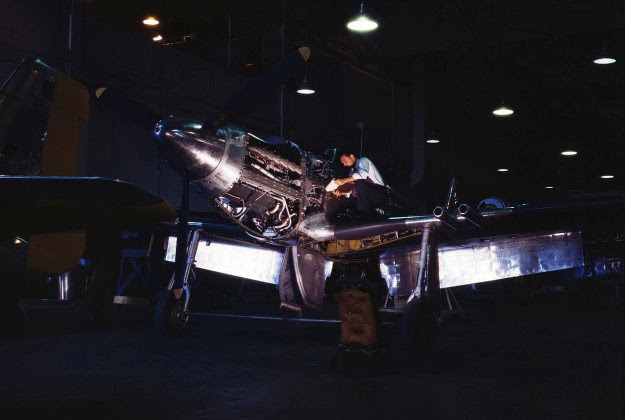
Under the hangar lights at North American Aviation in Los Angeles, a P-51 Mustang sits mid-assembly, its metal skin catching bright reflections that emphasize the aircraft’s sharp, purposeful lines. The colorization brings out a workshop atmosphere—deep shadows, glossy panels, and the cool sheen of machinery—turning an industrial moment into something almost theatrical. Even without the roar of an engine, the scene hints at speed and urgency, the Mustang’s form already unmistakable as one of World War II’s most celebrated fighter designs.
A worker leans into the open engine area, hands busy with parts and fittings that would soon be sealed behind streamlined cowling. That close-up view of the nose section, with its exposed components and carefully aligned surfaces, underscores how much of wartime airpower depended on patient, precise labor. The aircraft’s landing gear and surrounding supports suggest a production floor built for repetition and efficiency, where each step had to be right before the next airframe moved forward.
For readers searching the story behind the P-51 Mustang’s rise, this 1942 factory scene is a reminder that legends begin as unfinished frameworks under bright lamps. The Los Angeles connection matters too, placing the Mustang within the vast Southern California aviation network that helped supply the Allied war effort. As a historical photo and colorized snapshot of wartime manufacturing, it invites a closer look at the human scale of aircraft construction—rivets, panels, inspections, and long shifts—before the Mustang ever took to the sky.