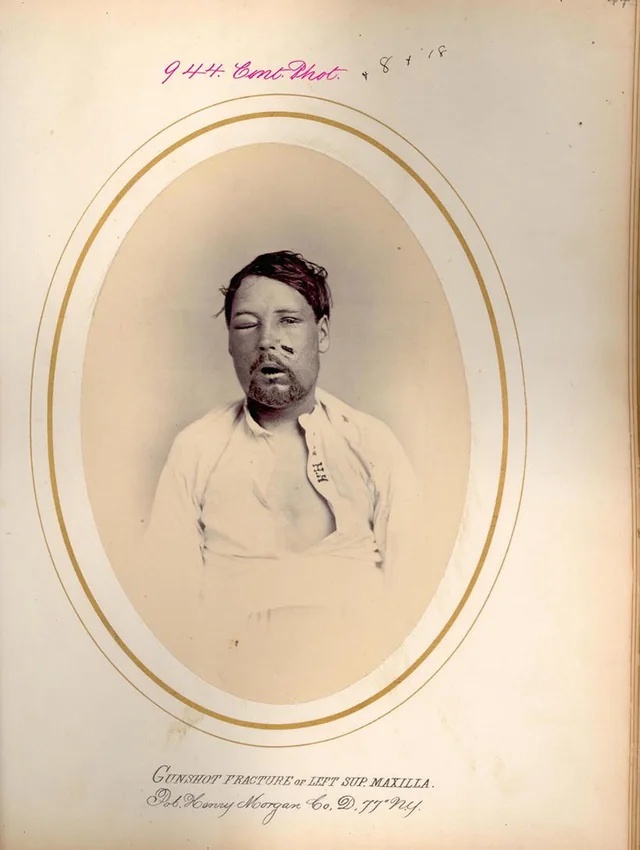
Set within an oval studio frame, a wounded soldier stares forward with a swollen, damaged face and a slackened jaw, the clinical stillness of the portrait at odds with the violence that caused it. Handwritten notes along the border and a caption describing a gunshot fracture to the upper jaw give the image a case-file quality, suggesting it was made for documentation as much as remembrance. The result is intimate and unsettling: not a battlefield scene, but the aftermath carried on a single body.
Surviving limb loss and other catastrophic wounds in the Civil War meant entering a long second campaign—against infection, pain, disability, and the daily improvisations required to work, eat, travel, and provide for family. Photographs like this one were often produced in medical settings to record injuries and outcomes, but they also inadvertently preserved the expressions of endurance that rarely appear in celebratory war imagery. When viewed today, the portrait invites readers to consider how wartime surgery, hospital care, and early rehabilitation shaped the lives of amputee and severely wounded veterans.
Beyond the immediate shock, the image opens a wider story about postwar America: prosthetics and pensions, public sympathy and stigma, and communities learning to accommodate men altered by combat. For those searching “Civil War amputee veterans,” “Civil War wounds,” or “Civil War medical photography,” this post connects the stark evidence of injury to the human narratives of survival. It is a reminder that the war’s casualties were not only those who died, but also those who lived—marked, adapting, and remembered in photographs that still ask us to look closely.