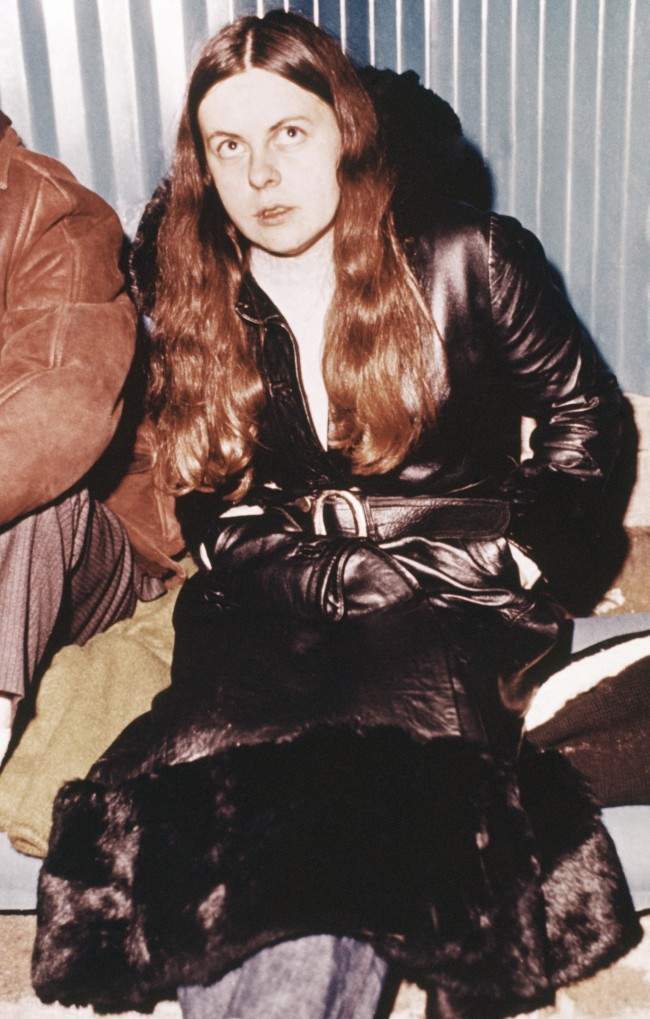
Bernadette Devlin sits bundled into a dark, glossy coat, her long hair falling forward as she fixes a steady, unsmiling gaze toward the camera. The tight framing and harsh indoor lighting heighten the sense of strain that comes with an all-night vigil, while the crowded edges—another figure’s shoulder at left, bedding or bags at the bottom of the frame—hint at the improvised, endurance-test atmosphere of a picket.
Taken during her all-night picket at Number Ten Downing Street in London on Oct. 20, 1971, the photograph places the Mid-Ulster Member of Parliament squarely inside the era’s street-level politics. Rather than a parliamentary portrait, it reads like a moment snatched from the long hours between speeches and headlines, when protest becomes waiting, and resolve is measured in posture, fatigue, and the refusal to leave.
In the broader context of “Civil Wars,” this image speaks to the brittle politics of early-1970s Britain and Northern Ireland, when demonstrations outside government buildings carried global attention and personal risk. For readers searching Bernadette Devlin, Mid-Ulster MP, Downing Street protest, or 1971 political activism, the scene offers a direct, human scale to the story: not an abstract dispute, but a young politician on the ground, holding her place through the night.