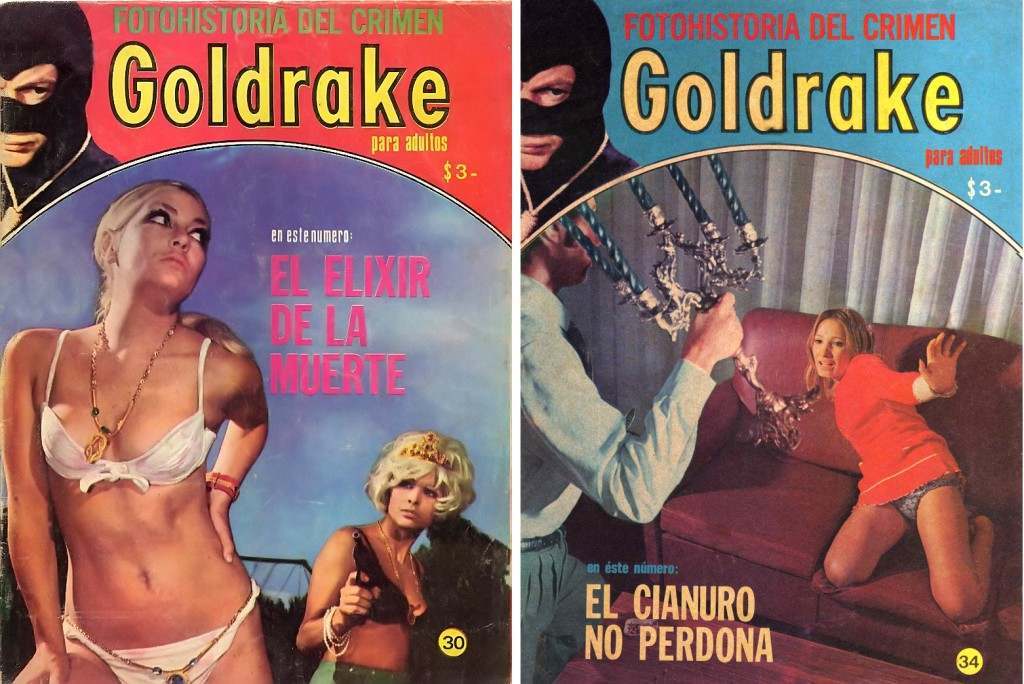
Bright pulp color and bold lettering pull you straight into the lurid world of *Fotohistoria del Crimen* and its recurring banner title, “Goldrake,” a crime fotonovela “para adultos.” These cover designs lean on the era’s magazine-stand theater—large, sensational type, dramatic posing, and a promise of danger—making them perfect examples of Spanish-language crime comics that told their stories through staged photography rather than drawn panels.
On the left, the headline “El elixir de la muerte” sets a fatal tone while the models’ styling and hard stares signal the mix of seduction and menace that defined many 1960s–70s fotonovelas. The masked figure peering in from the corner, the pistol, and the carefully arranged glamour suggest a genre that borrowed from film noir, tabloid crime reporting, and exploitation cinema, compressing a whole scandalous plot into a single, irresistible cover.
Across the spread, “El cianuro no perdona” pushes the suspense further: a woman recoils on a sofa as a man thrusts a chemical spray toward her, freezing a moment of panic as if it were a movie still. Together these covers show how Spanish and Italian crime comics marketed shock, risk, and adult intrigue—photographic storytelling designed to be read quickly, remembered vividly, and collected for their striking cover art as much as their cliffhanger narratives.