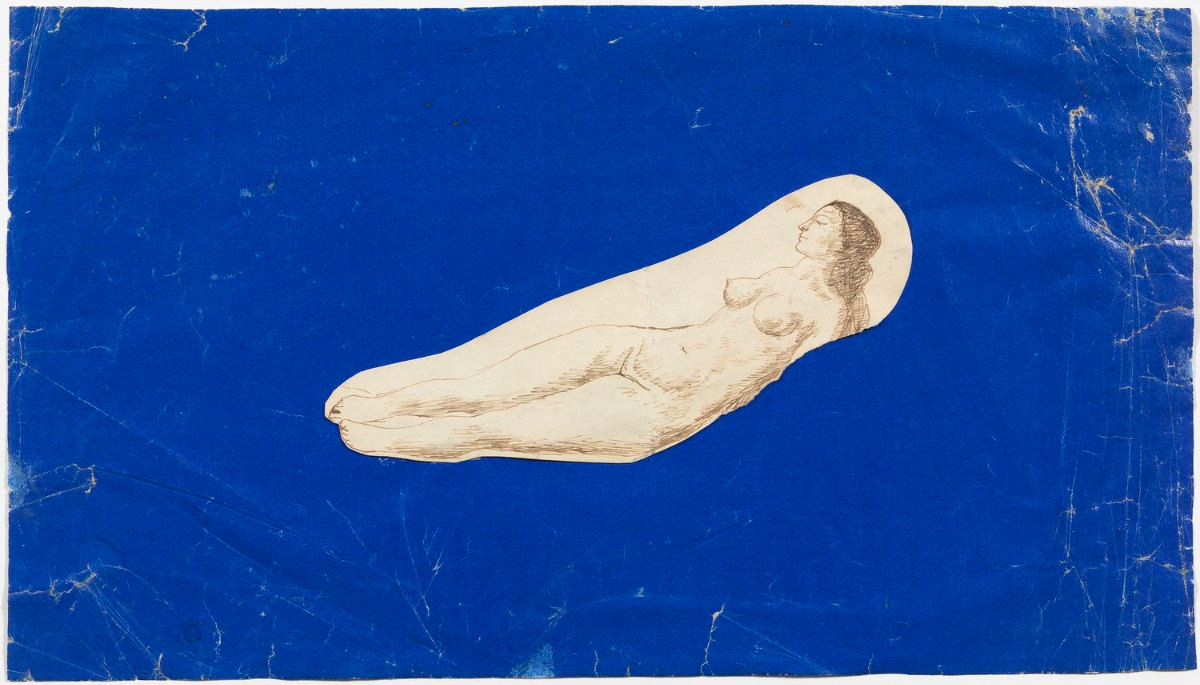
Against a deep, weathered field of blue, a single cut-paper figure drifts like a quiet thought—an uncluttered composition that makes negative space do as much work as line. The reclining nude, rendered with spare pencil strokes on pale paper, feels both intimate and experimental, a reminder that modern art isn’t only built from paint and canvas but also from scissors, scraps, and daring simplicity. Scuffs and creases along the border read like a small history of handling, framing the artwork as an object that has traveled through time as well as taste.
Paper mosaics and cut-paper artworks often reveal an artist thinking out loud: adjusting contour, testing proportion, and letting the edges of the paper become part of the drawing. Here, the silhouette is the structure, while the sketched shading gives the body a soft volume that contrasts with the flat, saturated background. The result is an elegant tension between the handmade and the graphic, between the studio’s quiet labor and the bold modernist appetite for reduction.
“Paper Mosaics: Picasso’s Rare Cut-Paper Artworks” invites a closer look at this lesser-discussed corner of twentieth-century creativity, where collage and drawing meet in a single breath. Readers searching for Picasso cut-paper art, historical collage, or modernist works on paper will find plenty to linger over in the choices of color, placement, and economy of line. Even without a specific captioned date or place, the piece speaks clearly: an artwork built from humble materials, elevated by precision and audacity.