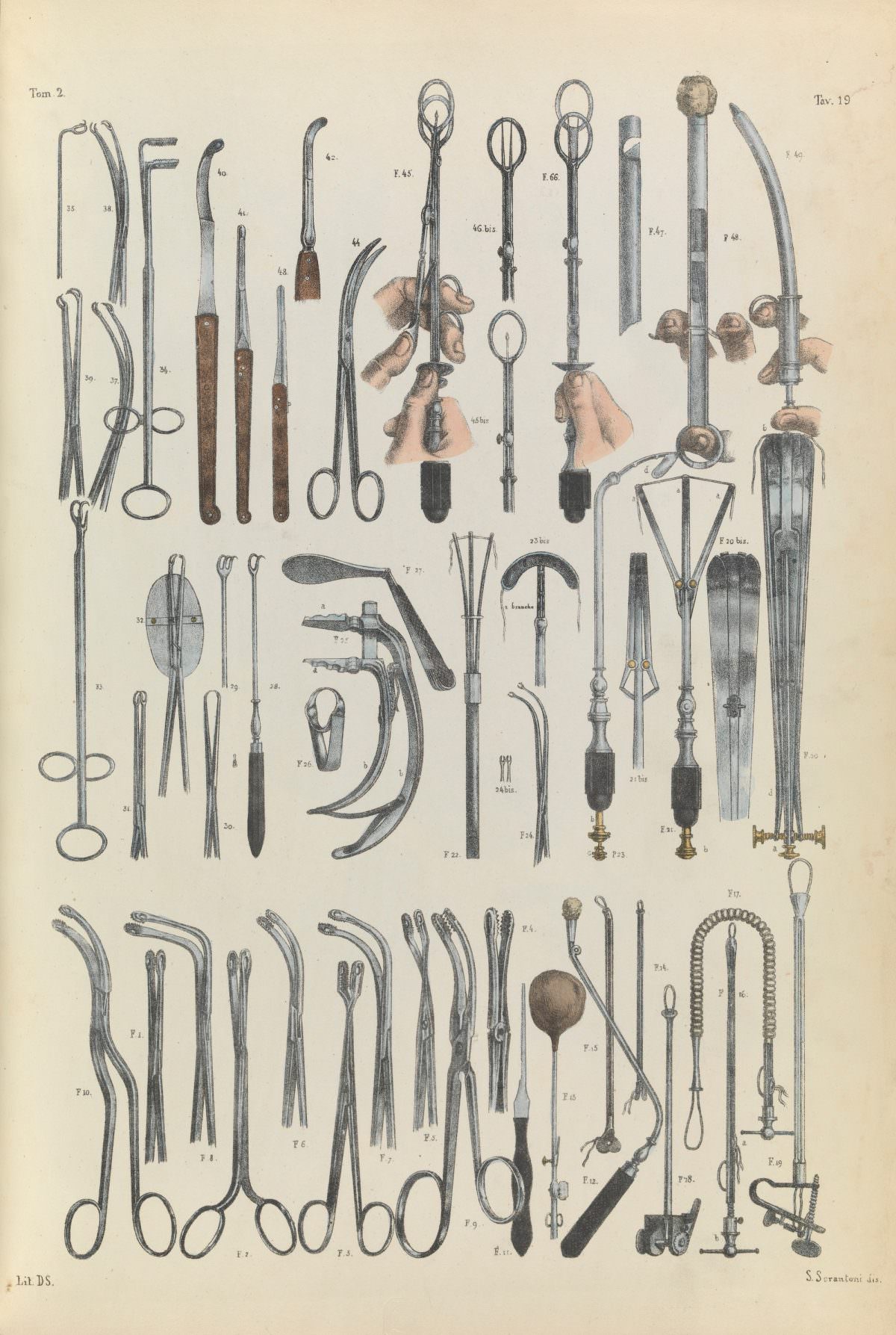
Plate 19 from “Tomo II” reads like a catalog of ingenuity at the edge of the human airway, presenting surgical instruments designed for work on the tonsils and deep within the nasal cavity. Arranged with measured spacing and numbered labels, the tools range from long, slender probes to curved blades and ring-shaped snares, each profile suggesting a very specific task. The careful rendering turns practical steel into a kind of visual taxonomy, inviting the viewer to compare shapes, tips, and angles at a glance.
Curved forceps and hooked implements dominate the page, echoing the anatomical contours they were meant to navigate, while bulbous handles and looping grips hint at the need for steady control during delicate procedures. Several instruments appear in use, shown in hands for scale, a small but telling detail that bridges the distance between diagram and operating room. Even without a named surgeon or stated date, the illustration communicates an era of medicine when precision depended as much on craftsmanship and technique as on anatomy and experience.
For collectors of medical ephemera, historians of surgery, or anyone searching for antique ENT instrument illustrations, this tavola offers a compelling look at historical approaches to polyp removal and throat operations. The artwork’s restrained color and meticulous linework make it equally valuable as a study reference and as wall-worthy print material. Viewed today, it stands as both a technical document and a reminder of how the tools of healing have evolved alongside our understanding of the body.