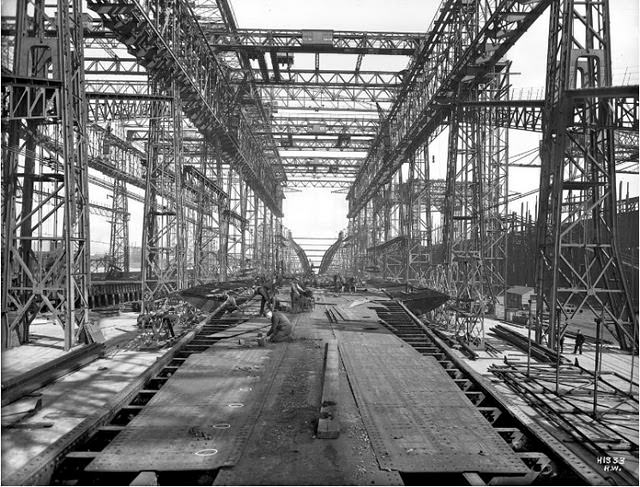
Steel gantries stretch overhead like a cathedral of industry, framing a long, busy slipway where workers and machinery shaped enormous hull plates into something the world would soon call “unsinkable.” The perspective pulls the eye down the centerline of construction, past rivet lines, stacked timbers, and the skeletal outlines of shipyard equipment, hinting at the sheer scale required to build an ocean liner meant to redefine travel. Even without close-up faces, the human presence is unmistakable in the small figures moving through a landscape of metal and shadow.
Behind the legend of the Titanic lies the practical reality of early 20th-century engineering: thousands of parts, relentless coordination, and innovations in shipbuilding that pushed materials and labor to their limits. The photograph’s industrial geometry—cranes, beams, and scaffolding—speaks to a period when shipyards were among the most advanced workplaces on earth, where new tools and production methods accelerated the race for size, speed, and prestige. It’s the kind of scene that makes “construction” feel less like a single event and more like an unfolding campaign of invention.
For readers searching Titanic history, Titanic construction photos, or the shipyard technologies that helped launch an era of luxury liners, this image offers a grounded starting point. It invites a closer look at how reputation is manufactured long before a maiden voyage—through design choices, workmanship, and the confident language of progress that surrounded big engineering projects. The story of the Titanic’s rise to fame begins here, amid noise, grit, and the ambitious infrastructure built to turn raw steel into global spectacle.