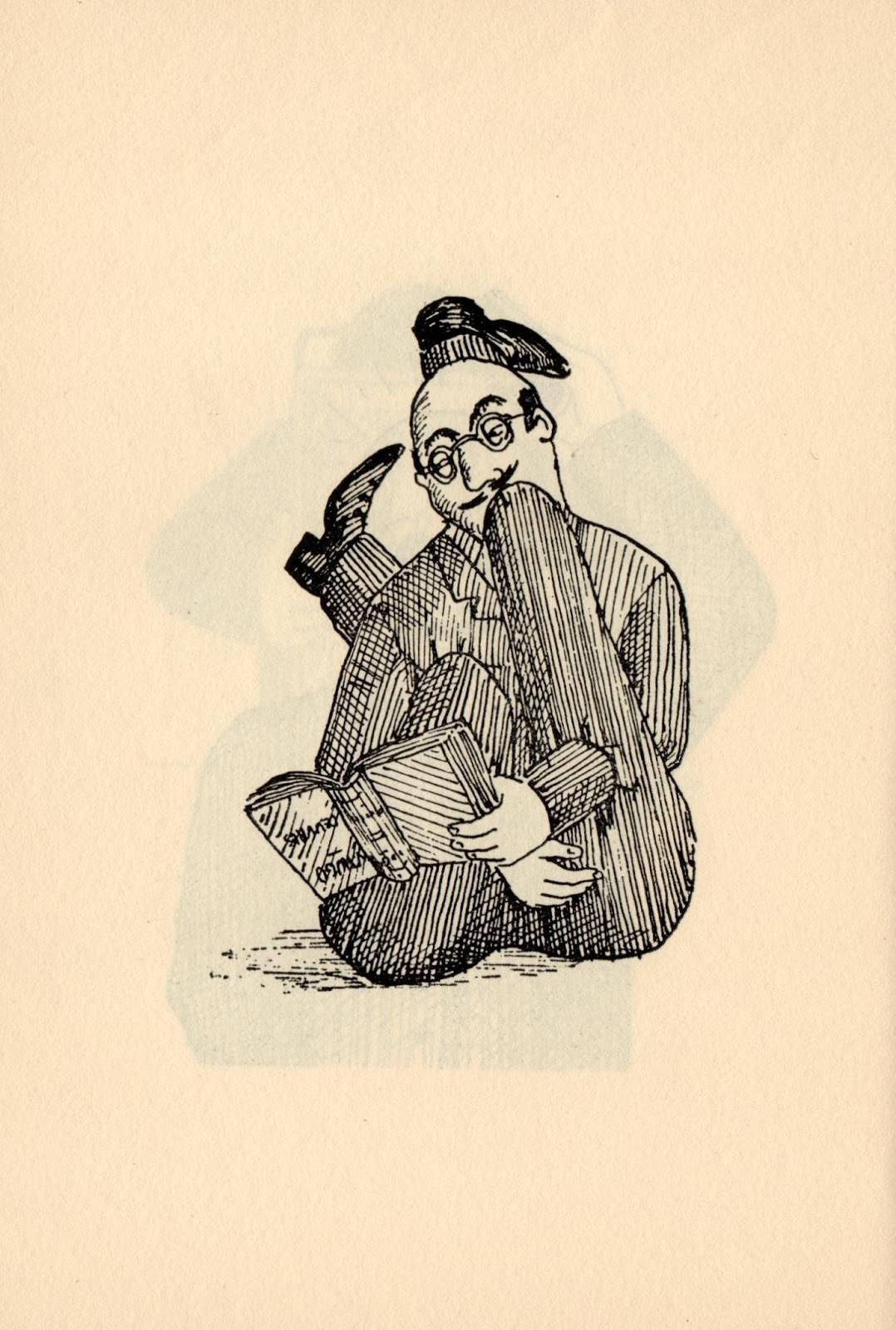
A lone figure sits curled on the page, dressed in a tidy suit and round spectacles, yet contorted into an impossible posture that feels both comic and cruel. One shoe hooks up behind the head, and the body folds inward as if trying to disappear into itself, while a book rests open in the lap—an ordinary object turned into a quiet accomplice. Rendered with crisp ink lines and dense hatching, the drawing’s simplicity sharpens its sting, leaving a wide field of blank paper that amplifies the sense of isolation.
Roland Topor’s 1960 illustration, as suggested by the post title, probes masochism through exaggeration rather than spectacle, making discomfort look like a private ritual. The character’s composed face contrasts with the strained pose, hinting at a psychological tension between intellect and bodily constraint. That uneasy balance—humor flirting with harm—places the work in the realm of dark satire, where the viewer is invited to laugh and then immediately question why.
For readers exploring masochism art and twentieth-century illustration, this piece offers a compact lesson in how line, posture, and negative space can communicate pain without explicit violence. The book, the suit, and the carefully crosshatched shading evoke respectability, only to undermine it with a posture that reads as self-imposed punishment. Posted here as a historical image and an artwork study, it encourages a closer look at Topor’s visual language and the way his drawings turn inner conflict into unforgettable form.